Quick answer
If your water heater is leaking, turn off the gas or power to it, close the cold water valve on the pipe going into the top, and keep clear of hot water. A leak from a valve or fitting can often be repaired. A leak from the tank itself usually means the heater needs to be replaced.
Finding water around your water heater is stressful. It could be a loose fitting, a relief valve doing its job, or a tank that has started to fail. The steps below help you shut things down safely and figure out what you're dealing with before the plumber arrives.
Step 1: Make it safe
If you smell gas, don't touch the heater. Get everyone out and call the gas company from outside. Our guide on what to do if you smell gas walks through it. If there's no gas smell:
- Gas water heater: turn the knob on the gas control to Off.
- Electric water heater: switch off its breaker at the panel. Never stand in water to reach the panel. If you can't get to it from a dry spot, stay out of the area and call an electrician or your utility.
- Tankless water heater: turn it off at its power switch or breaker and follow the maker's instructions.
Watch out for scalding. Water in the tank can be very hot. The U.S. Consumer Product Safety Commission notes that most adults get third-degree burns after just two seconds in 150°F water. Don't put your hands in a leaking stream, and keep kids and pets away.
Step 2: Shut off the water to the heater
Find the cold water pipe going into the top of the tank. It should have a shut-off valve. Turn a round handle clockwise until it stops, or turn a lever a quarter turn so it sits across the pipe. This stops new water from flowing into the tank.
If that valve won't close, or water is spreading fast, shut off the water to the whole house. See our guide to the main water shut-off valve.
You usually don't need to drain the tank yourself. The water inside may stay hot for hours. Unless water is spreading and you know how to drain it safely, leave that for the plumber.
Step 3: Find where the water is coming from
Dry the tank, fittings, and floor with towels. Then watch where water shows up again. Look at the top, the sides, the drain valve near the bottom, and the relief valve and its pipe.
| Where the water is | Common cause | Repair or replace? |
|---|---|---|
| Pooling under the tank, rust on the tank body or base | The inside of the tank has corroded through | Replace. A rusted-through tank can't be reliably repaired. |
| Drain valve near the bottom | Loose or worn drain valve | Often repairable |
| Pipes and connections on top | Loose or corroded fittings, or a worn flexible connector | Often repairable |
| Relief valve or its discharge pipe | Pressure or temperature too high, or a worn valve | Usually repairable once the cause is found |
| Drips under a gas heater only when it first heats cold water | Condensation, which can be normal | Should stop as the tank warms. If it keeps dripping, have it checked. |
| Water near the heater but not from it | AC condensate line, a nearby pipe, or another appliance | Find and fix the real source |
Leaking from the bottom
Water at the bottom is the most worrying kind of leak. First rule out the drain valve. If it's dripping from the valve opening or the threads, it can often be tightened or replaced.
If the water is coming from the tank itself, the steel inside has likely corroded through. Over time, minerals settle at the bottom and the tank's protective lining and anode rod wear down. Once the tank body is leaking, it can't be reliably patched, and the leak usually gets worse. The fix is a new water heater.
Age is a big clue. The U.S. Department of Energy puts tank water heaters at about 10 to 15 years. The manufacture date is on the label, or coded into the serial number. A tank near or past that range with rust on the bottom is at the end of its life.
Leaking from the top
Leaks at the top are usually from the connections, not the tank. Common sources are the hot and cold water fittings, the flexible connectors, the cold water shut-off valve, or the relief valve threads. These are often simple repairs. Corrosion where the pipes connect can be a sign of age, so it's worth having the whole heater looked at.
Leaking from the T&P relief valve
Every tank heater has a temperature and pressure (T&P) relief valve, usually on the top or upper side, with a pipe running down or outside. It's a safety device. Residential T&P valves are commonly rated to open at about 150 psi or 210°F, letting out water so the tank doesn't build up dangerous pressure.
If water is coming from the relief valve or its pipe, it may be doing its job. Common causes include:
- Thermal expansion. Water expands as it heats. If your home has a pressure regulator or check valve, that extra volume has nowhere to go unless there's an expansion tank or other way to handle it.
- House pressure that's too high. A failed or missing pressure regulator can push pressure up. The California Plumbing Code calls for a regulator when static pressure is above 80 psi.
- Water that's too hot. A thermostat set too high or a faulty control can overheat the water.
- A worn valve. Valves can wear out or get debris in the seat and drip even at normal pressure.
California rules that matter for your heater
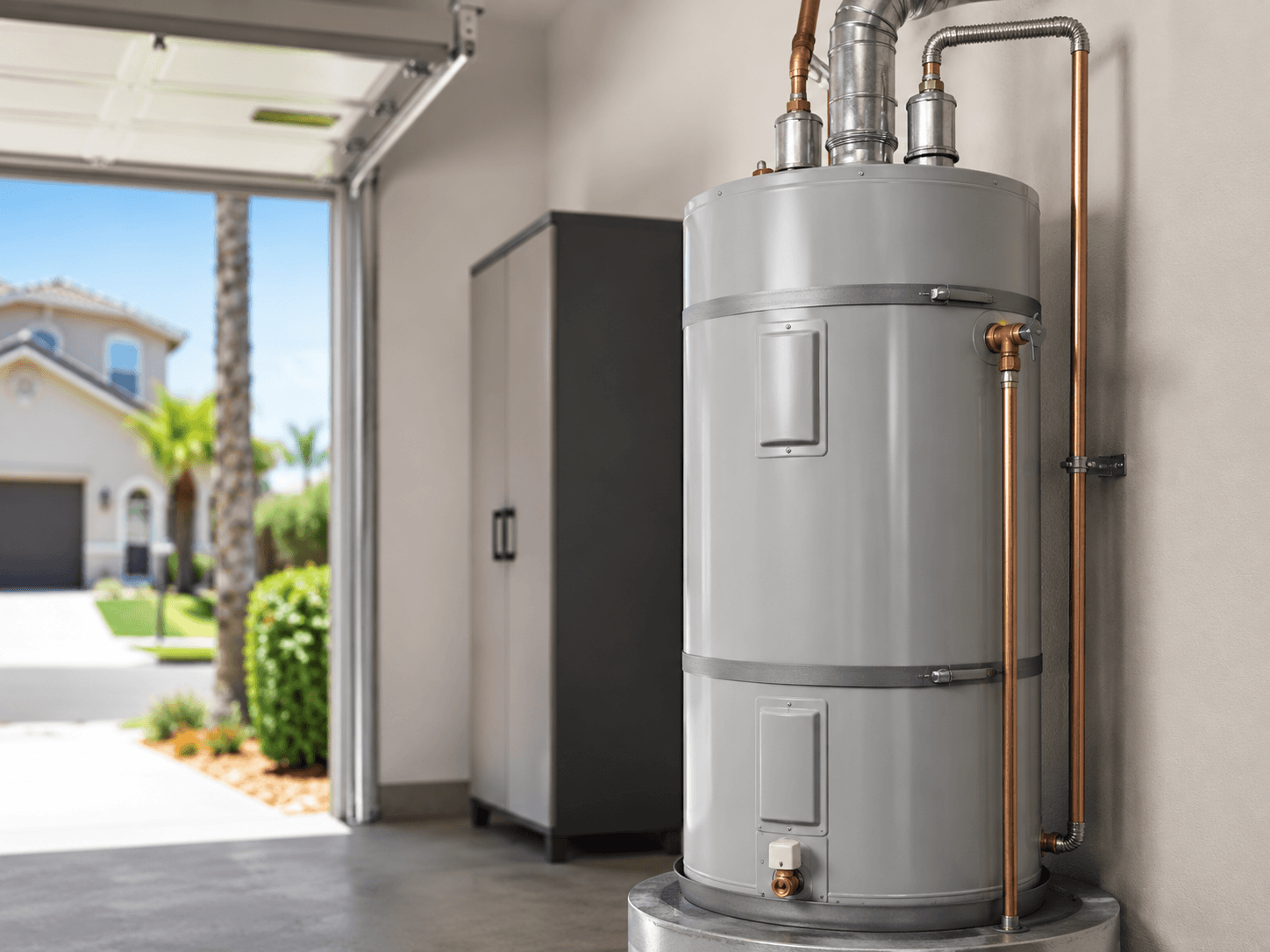
- Earthquake straps. California Health and Safety Code section 19211 requires residential water heaters to be braced, anchored, or strapped so they won't fall or shift in an earthquake. For tank heaters, the plumbing code calls for straps in the upper third and lower third of the tank, with the lower strap at least 4 inches above the controls. A heater that tips over can break its gas and water lines.
- Drain pans in attics and similar spots. The California Plumbing Code calls for a watertight, corrosion-resistant pan under a water heater in an attic, or anywhere a leak would damage the building. The pan must be at least 1-1/2 inches deep with a drain at least 3/4 inch in diameter running to an approved location. If your heater is in the attic, check that the pan isn't rusted and the drain isn't blocked.
- Permits. Most California cities and counties require a permit to replace a water heater.
Why fast action matters: water damage
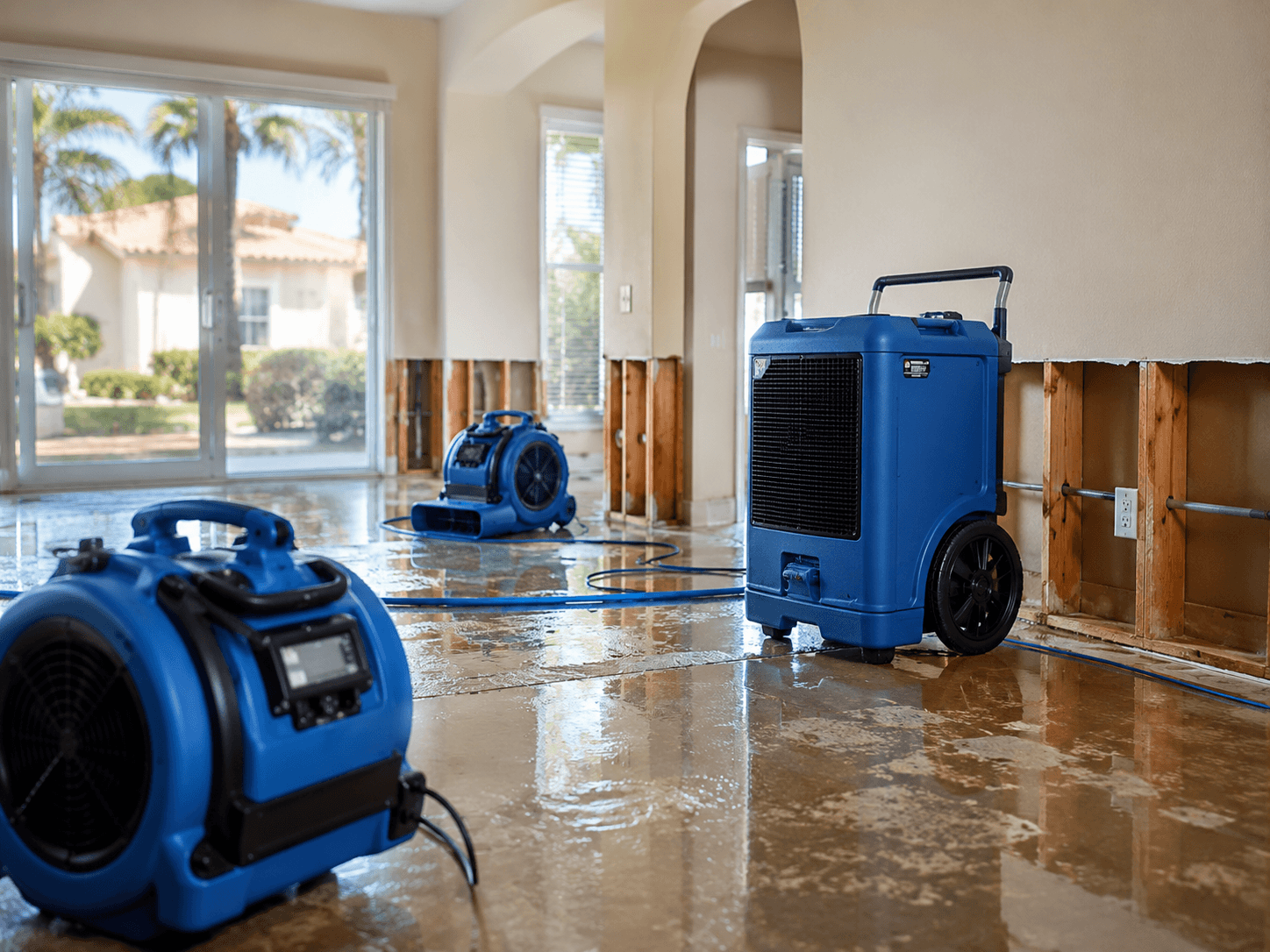
A typical tank holds 40 or 50 gallons, and it keeps refilling as long as the cold water valve is open. A leaking heater in a closet, garage, or attic can soak drywall, baseboards, flooring, and ceilings. Water that sits for a day or two can lead to swelling and mold.
If water has spread past the heater, mopping the floor isn't enough. Moisture hides in walls and under flooring. Our IICRC-certified water damage restoration team can measure moisture, dry the area, and document the damage with photos for your records.
Repair or replace?
A repair often makes sense for a leaking drain valve, a loose fitting, a worn connector, or a relief valve problem on a younger heater. Replacement usually makes sense when the tank itself is leaking, the heater is near or past 10 to 15 years, or it keeps having problems.
If you're replacing it, this is a good time to compare options. Our guide to tankless vs tank water heaters covers cost, lifespan, and installation. We install both, and we'll give you up-front pricing approved before work begins. Learn more about our water heater replacement service.
Water heater leaking right now? First Call Plumbing & Restoration is open 24/7, and emergency arrival is typically 1-2 hours, depending on your location and call volume. Call (909) 751-2323 or contact us.
Frequently asked questions
Is a leaking water heater an emergency?+
It can be. A large leak, water spreading toward walls or flooring, a leak from an attic heater, or any gas smell needs fast action. Turn off the gas or power, close the cold water valve, and call a plumber. A small drip from a fitting is still worth fixing soon.
Can a water heater leaking from the bottom be fixed?+
Sometimes. If the water is coming from the drain valve, it can often be tightened or replaced. If the water is coming from the tank itself, the tank has usually corroded through and can't be reliably repaired. In that case, the heater needs to be replaced.
Why is my water heater relief valve leaking?+
Common causes are thermal expansion in a home with a pressure regulator or check valve, house water pressure that's too high, water that's too hot, or a worn valve. Never plug or cap the relief valve. Have a plumber find and fix the cause.
Should I turn off my water heater if it's leaking?+
Yes. Turn the gas control to Off on a gas heater, or switch off the breaker for an electric heater. Then close the cold water valve on the pipe going into the top of the tank. If you smell gas, leave the house and call the gas company from outside.
Does a water heater need a drain pan in California?+
The California Plumbing Code calls for a watertight pan with a drain under a water heater in an attic, or anywhere a leak would damage the building. For other locations, it depends on where the heater sits and on local rules, so ask your plumber or building department.
This guide is general information, not a quote or professional advice for your specific home or insurance policy. Prices are approximate - we give an up-front quote before any work begins.