Quick answer
Trenchless sewer repair fixes a line through small access points by lining the old pipe (CIPP) or bursting it and pulling in new pipe, while traditional repair digs a trench to replace it. Trenchless often saves landscaping and hardscape, but bellies and fully collapsed sections may still need digging, so a camera inspection comes first.
The camera footage is back, and your main sewer line has a problem: roots in the joints, a crack, or a section that has shifted or caved in. Now you're hearing terms like pipe lining, pipe bursting, and trenchless, along with the old-school option of digging a trench across the yard.
Each method has a place. The right one depends on the condition of your pipe, its shape and slope, what's on top of it, and your budget. This guide explains how each method works, which problems each one can and can't fix, and what drives the cost.
The three options at a glance
| Pipe lining (CIPP) | Pipe bursting | Dig and replace | |
|---|---|---|---|
| How it works | A resin-soaked liner is put inside the old pipe and hardened into a new pipe within a pipe | A bursting head breaks the old pipe outward while new pipe is pulled in behind it | A trench is dug along the line, and the old pipe is removed and replaced |
| Often a good fit for | Cracks, small holes, and root entry at joints in a pipe that still holds its shape | Badly cracked or broken brittle pipe, such as clay; can install the same or a larger size | Bellies, full collapses, short shallow runs, and single bad sections |
| Not a good fit for | Collapsed or badly deformed pipe, significant bellies, or pipe that's already too small | Significant bellies (they must be corrected first) or lines with other utilities very close by | Lines under driveways, slabs, mature trees, or hardscape you want to keep |
| Digging | Little to none; often through a cleanout or a small access hole | Usually two pits, one at each end | Along the full length or the damaged section |
Start with a camera inspection
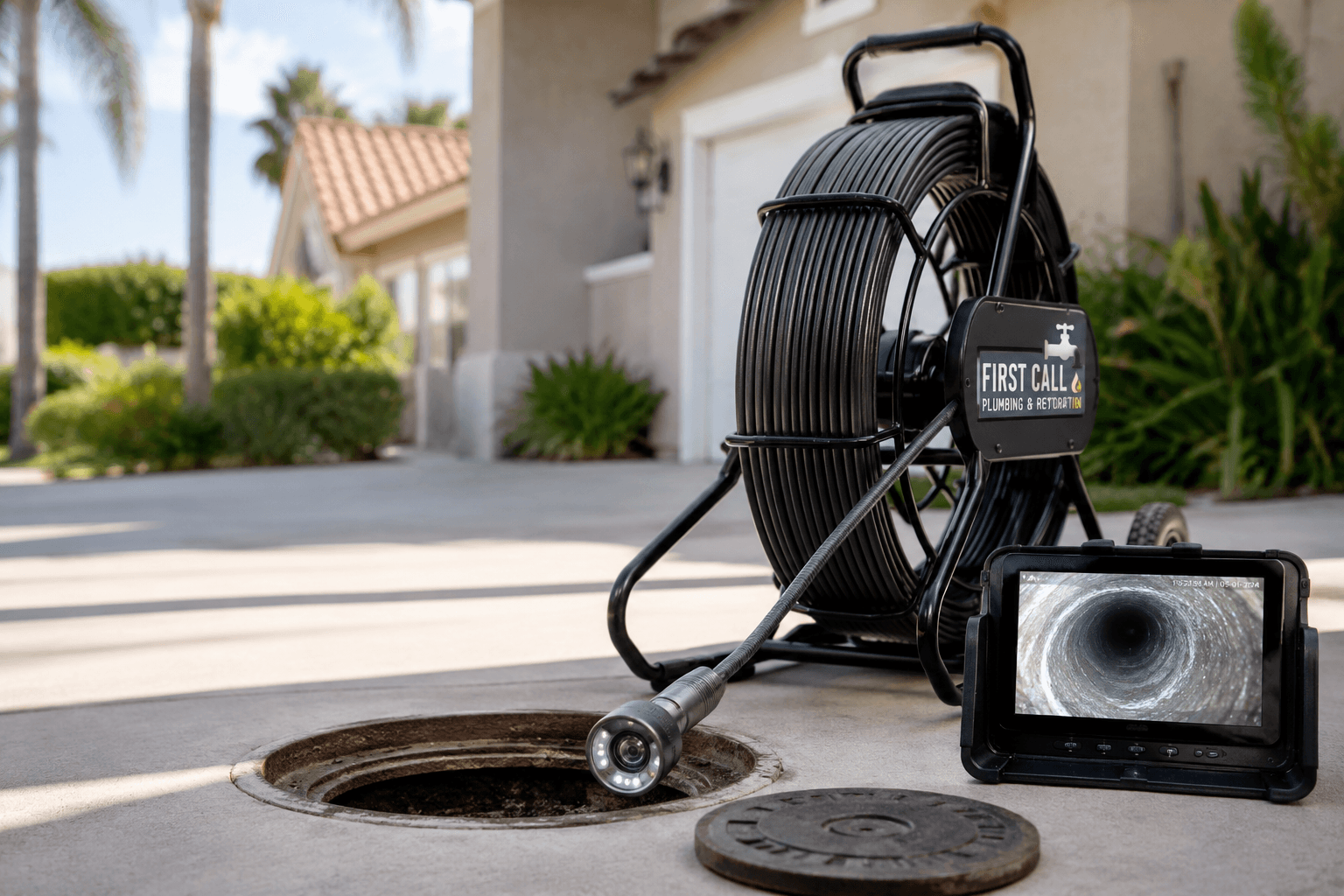
You can't choose a repair method without seeing inside the pipe. A sewer camera shows the pipe material, where the damage is, how deep it is, and whether the line sags or has collapsed. That footage is what tells a plumber whether lining will hold, whether bursting will work, or whether some digging is unavoidable.
Our current special includes a FREE HD camera inspection of your main sewer line with $69 snaking of one problem drain line. The camera goes in through an existing, accessible ground-level cleanout. We snake the drain line only, not the main sewer line, and homes without an accessible cleanout may need extra access, which is quoted separately. See sewer camera inspection for details. Buying a home? Read why a sewer scope matters before you close.
Pipe lining (CIPP): a new pipe inside the old one
CIPP stands for cured-in-place pipe. Here's how a typical job goes:
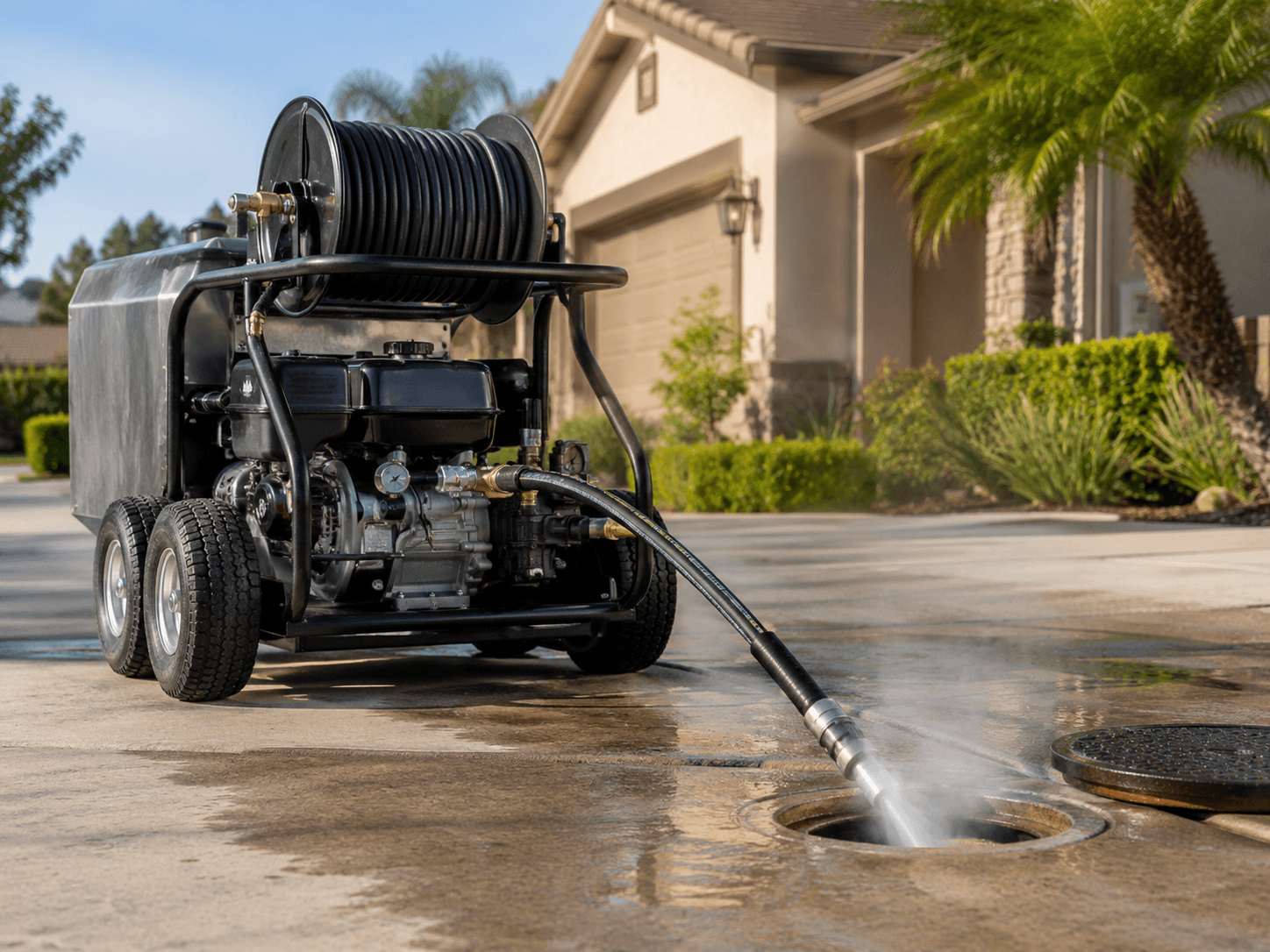
- Clean the line. Roots, scale, and debris are removed, often with hydro jetting, so the liner can bond to a clean surface.
- Camera and measure. The crew confirms the pipe is a good candidate and measures the length to be lined.
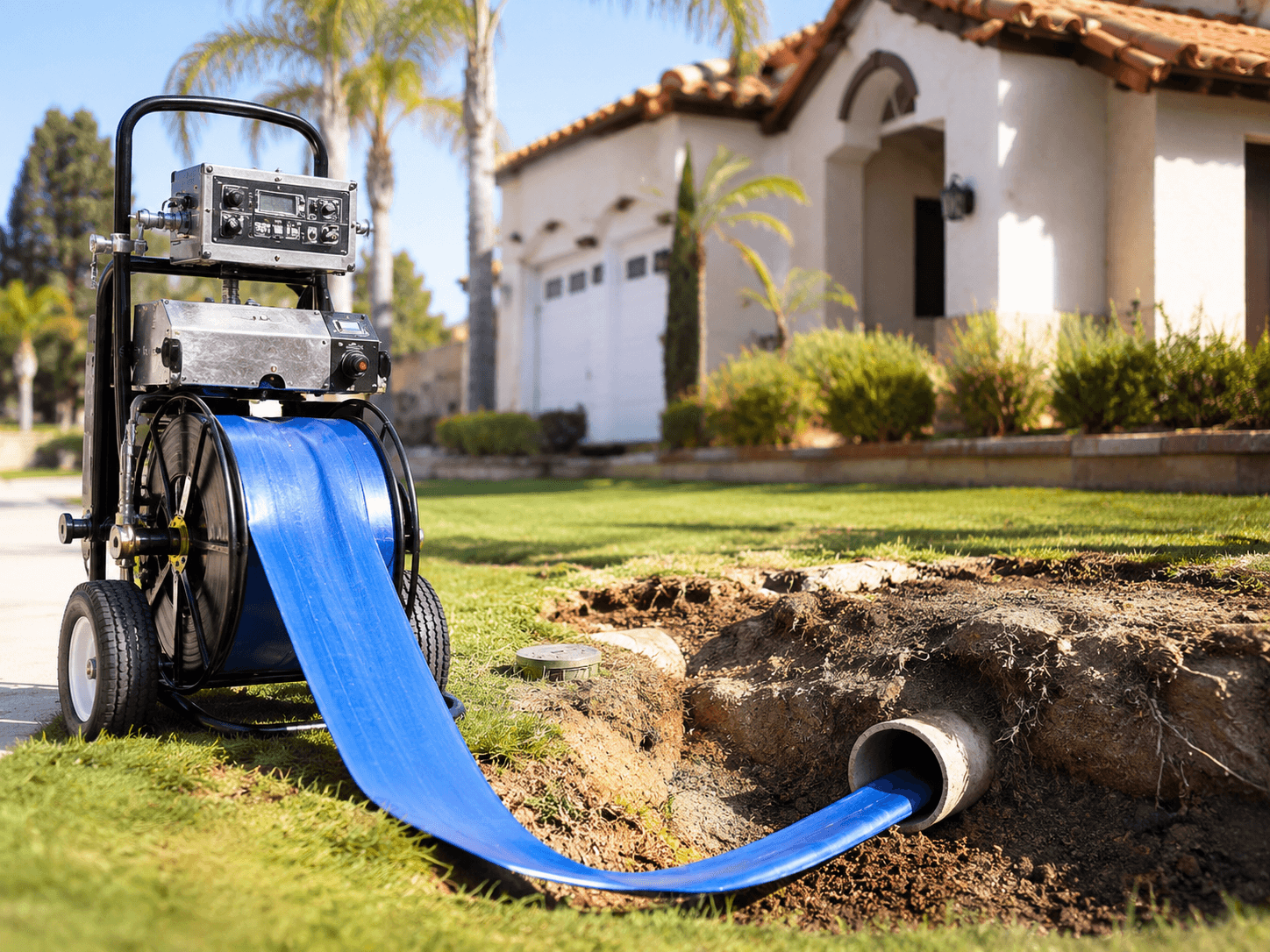
- Install the liner. A flexible tube soaked in resin is pulled or turned inside out into the old pipe, then pressed against the pipe walls.
- Cure it. The resin is hardened with heat or, in some systems, UV light, forming a smooth, jointless pipe.
- Reopen connections and verify. Any branch connections are reopened from inside, and the finished line is checked on camera.
Pros: little or no digging, no joints for roots to get into, and your yard, driveway, and landscaping usually stay in place.
Limits: the liner takes the shape of the pipe it's in. It can't fix a belly (a low spot where waste collects) or fill in a collapsed section, and the old pipe has to be intact enough to hold the liner. Lining also slightly reduces the inside diameter.
How long does it last? Engineering design manuals generally accept a service life of about 50 years for properly designed and installed CIPP liners. Real results depend on the installation, so ask for the warranty terms in writing.
Pipe bursting: replacing the pipe without a trench
Pipe bursting replaces the old pipe instead of lining it. The crew digs a pit at each end of the line. A cone-shaped bursting head is pulled through the old pipe, breaking it apart and pushing the pieces into the surrounding soil. New seamless plastic pipe, often HDPE, is pulled in right behind it.
Pros: you get a brand-new pipe along the old path, often the same size or larger. It works well on brittle pipe, like clay, that is too broken to line.
Limits: it needs two pits. Significant sags need to be corrected before bursting. Because bursting pushes soil outward, crews must locate nearby gas, water, and other lines first, and lines that are too close may need to be exposed or may rule bursting out.
Traditional dig and replace
Open-trench replacement is the original method: dig down to the pipe, remove the damaged section or the whole line, and lay new pipe. It's still the right answer in some cases.
- Bellies and slope problems. Digging is often the only way to re-grade a sagging line so it drains properly.
- Full collapses. If nothing can pass through, the collapsed spot may need to be dug up.
- Short, shallow, open runs. When the line is under bare soil or lawn, digging can be simple and cost-effective.
- One bad section. A single break can sometimes be dug up and repaired without redoing the whole line.
The downside is disruption. Lawns, gardens, walkways, and driveways in the path have to be removed and then put back, which adds time and cost.
What does each method cost?
National cost guides from HomeAdvisor, Angi, and This Old House give these approximate ranges. Southern California prices can differ, so use them as a starting point only.
| Method | Approximate national cost per foot |
|---|---|
| Traditional dig and replace | About $50 - $250 |
| Trenchless (overall) | About $60 - $250 |
| Pipe bursting | About $60 - $200 |
| Pipe lining (CIPP) | About $80 - $250 |
Notice that trenchless isn't always cheaper per foot. Where it often saves money is in what doesn't have to be rebuilt afterward: concrete, pavers, landscaping, and driveways. Other cost drivers include:
- Length and depth of the line
- Access - an existing cleanout vs. digging access pits
- Pipe condition - how much cleaning or root removal is needed first
- What's on top - lawn is easy to restore; a stamped concrete driveway is not
- Permits and inspections required by your city or sanitary district
Permits and who owns the line
Sewer line replacement usually needs a permit from your city or local sanitary district, and work in the street may need an extra encroachment permit. The homeowner is often responsible for the line from the house out to the city main, but the dividing point varies, so check with your city.
Questions to ask before you choose
- Can I see the camera footage, and where exactly is the damage?
- Why is this method the best fit for my pipe?
- Are there any bellies or collapsed spots, and how will they be handled?
- How many access points or pits will you dig, and where?
- What liner or pipe material will you use?
- Are permits, cleanup, and restoration included in the price?
- What warranty do you offer, and is it in writing?
- Will you camera the line again when the work is done?
Our trenchless sewer repair team will walk you through the footage and the options that fit your line, with an up-front price you approve before work begins. If sewage has already backed up into the house, see what to do after a sewage backup.
Sewer line trouble? First Call Plumbing & Restoration is open 24/7. Call (909) 751-2323 or contact us to schedule a camera inspection and find the right fix for your line.
Frequently asked questions
Is trenchless sewer repair cheaper than digging?+
Not always per foot. National cost guides list trenchless at about $60 to $250 per foot and traditional digging at about $50 to $250. Trenchless often saves money overall by avoiding the cost of rebuilding driveways, hardscape, and landscaping.
Can a sewer line with a belly be lined?+
Lining follows the shape of the existing pipe, so it won't fix a belly. A significant belly usually needs that section dug up and re-graded so the line drains properly. Pipe bursting also needs significant sags corrected first.
How long does sewer pipe lining last?+
Engineering design manuals generally accept a service life of about 50 years for properly designed and installed CIPP liners. Results depend on installation quality, so ask your contractor for warranty terms in writing.
Can a collapsed sewer pipe be fixed without digging?+
Sometimes. Lining can't be used on a collapsed section, but pipe bursting can often replace badly broken or partially collapsed pipe. If the line is fully blocked or sagging, at least some digging may be needed. A camera inspection tells you which applies.
Do I need a permit to replace a sewer line?+
Usually, yes. Most cities or local sanitary districts require a permit for sewer line repair or replacement, and work in the street may need an extra encroachment permit. Check with your city before work starts.
This guide is general information, not a quote or professional advice for your specific home or insurance policy. Prices are approximate - we give an up-front quote before any work begins.