Quick answer
In most Southern California homes, the main water shut-off is outside on the front or side of the house where the water line comes up from the ground, often near a hose bib. Some homes have it in the garage or water heater closet. Turn a round handle clockwise until it stops, or turn a lever a quarter turn.
When a pipe bursts or a supply line lets go, the one thing that stops the water is your main water shut-off valve. Many homeowners don't know where theirs is until water is already on the floor. Five minutes of looking today can save a lot of damage later.
This guide covers where the main shut-off usually is in a Southern California home, the two common valve types, how to turn the water off, and what to do if the valve is stuck.
Where to look in a Southern California home
Most homes here are built on a concrete slab, with no basement. The water line runs underground from the meter at the street to the house. The main shut-off is usually where that line comes up out of the ground or enters the house. Check these spots in order:
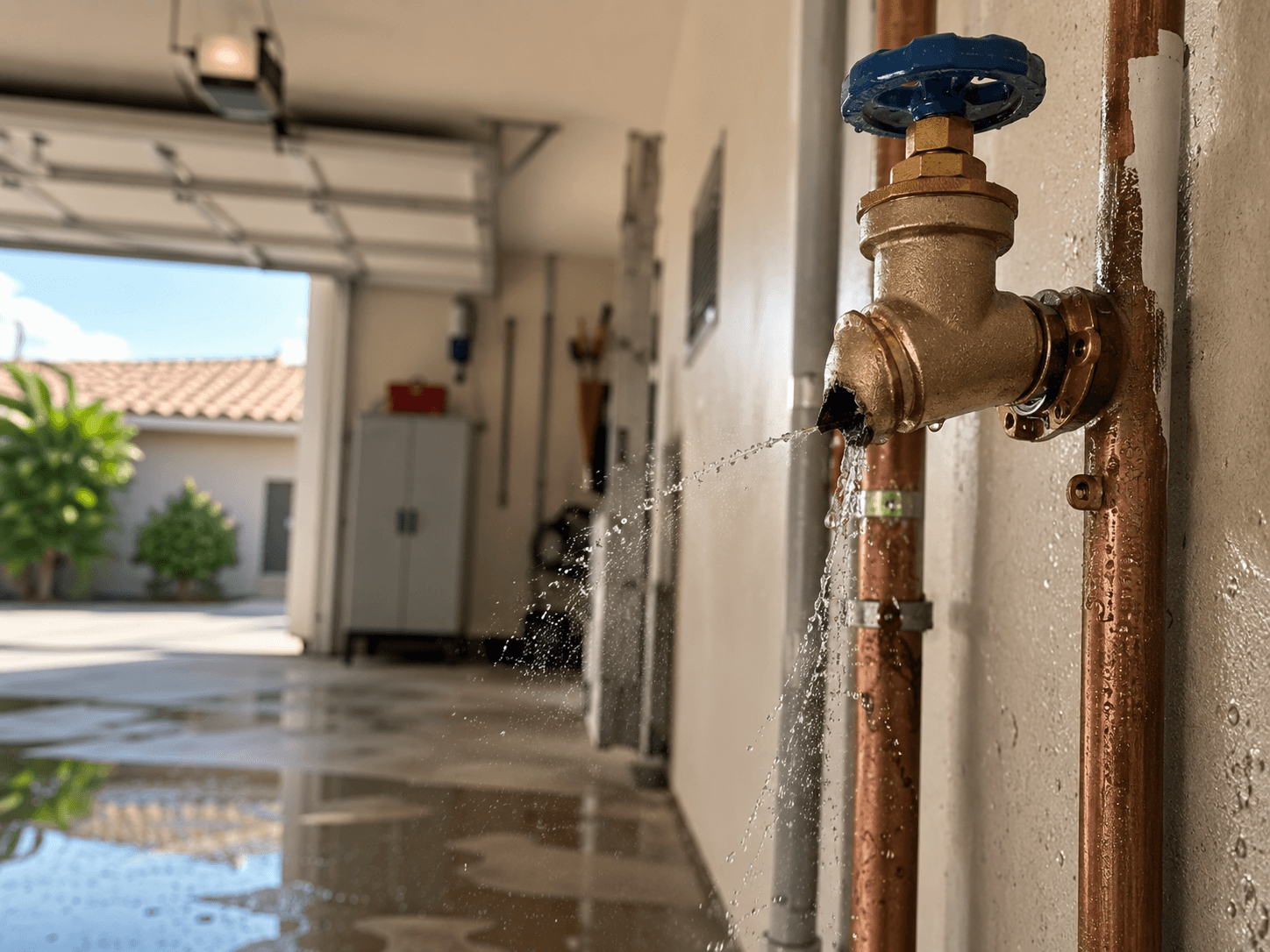
- Outside, near the front hose bib. This is the most common spot. Look for a copper or galvanized pipe coming up from the ground along the front or side wall, facing the street. The valve is on that pipe, often right next to an outdoor faucet. You may also see a bell-shaped brass part just past it. That is the pressure regulator, not the shut-off.
- In the garage. Some homes have the main valve on a garage wall, often the wall shared with the house or near the water heater.
- In the water heater closet. Some homes have the main shut-off here. But be careful: the valve on the pipe going into the top of the water heater only shuts off the heater, not the whole house.
- Condos and townhomes. The valve may be in a utility closet, under a sink, or on a line shared with other units. Ask your HOA or property manager where your shut-off is.
Still can't find it? Check your home inspection report, which often notes where the main valve is. You can also stand at the meter box and look toward the house. The valve is usually on the wall closest to the meter. If none of that works, ask a plumber to show you on the next visit.
The meter box at the street
Your water meter sits in a concrete or plastic box in the ground, usually near the curb or sidewalk. Inside there is a valve on the street side of the meter. In some areas there is also a customer shut-off valve on the house side of the meter.
The valve on the street side belongs to your water provider. Many water agencies ask customers not to operate it, and it often needs a special meter key. Rules vary by provider. If your water bill or the provider's website explains which valve you may use, follow that. If you can't shut the water off at the house, call your water provider's emergency line. The number is on your bill.
When you open a meter box, lift the lid slowly and look before you reach in. Insects and spiders often live in these boxes.
Gate valve or ball valve? How to tell
Most main shut-offs are one of two types. Knowing which one you have tells you how to turn it.
| Valve type | What it looks like | To shut off | Watch out for |
|---|---|---|---|
| Gate valve | A round handle, like a small wheel | Turn clockwise several times until it stops | Older gate valves can stick, leak at the stem, or not close all the way. Never force one. |
| Ball valve | A flat lever handle | Turn the lever a quarter turn so it sits across the pipe | When the lever lines up with the pipe, it's open. Across the pipe means closed. |
Ball valves are quicker to close and less likely to seize. If your home still has an old gate valve, a plumber can replace it with a ball valve.
How to turn off your water, step by step
- Get to the valve. Clear away plants, hoses, or boxes so you can reach it.
- Close it. For a gate valve, turn the handle clockwise with steady hand pressure until it stops. For a ball valve, turn the lever a quarter turn so it sits across the pipe.
- Check that the water is off. Open a cold water faucet inside. The flow should slow to a trickle and stop.
- Drain the lines if there is a leak. Open a faucet at the lowest point of the house, such as an outdoor hose bib or a tub faucet. This lets out water still sitting in the pipes.
- Protect your water heater. If the water will be off for a while or you are draining the lines, turn a gas heater to Pilot or Off, or switch off the breaker for an electric heater.
- Call a plumber if you have a leak you can't fix yourself.
For the full emergency plan, read what to do when a pipe bursts.
What to do if the valve is stuck
A valve that hasn't moved in years can seize. This is most common with older gate valves. If yours won't turn:
- Don't force it. Skip the long pipe wrench or a cheater bar. Forcing an old valve can snap the stem or crack the valve body, and then you have a bigger leak you can't stop.
- Try steady pressure. Gently work the handle a little back and forth. Sometimes this frees it up.
- Use the next valve. If your meter box has a customer shut-off on the house side, use that one. If not, call your water provider's emergency line and ask them to shut off the water.
- Have it replaced. A stuck, leaking, or broken shut-off should be replaced soon, not after the next emergency.
Test your shut-off twice a year
The best time to find out your valve is stuck is on a calm Saturday, not during a burst pipe. A good habit is to test it twice a year, for example when the clocks change in spring and fall:
- Close the valve all the way.
- Open a faucet inside to make sure the water stops.
- Open the valve fully again.
- Look at the stem for drips. A small drip at a gate valve stem can sometimes be stopped by snugging the packing nut just under the handle. If it keeps leaking, have the valve replaced.
While you're at it, put a tag on the valve, show everyone in the house where it is, and keep any tool you need close by.
When to call a plumber
- You can't find your main shut-off.
- The valve is stuck, leaking at the stem, or won't fully stop the water.
- The handle is broken or missing.
- You want to swap an old gate valve for a ball valve.
- The pressure regulator next to the valve is leaking, or your water pressure seems too high or too low. See our guide to low water pressure causes.
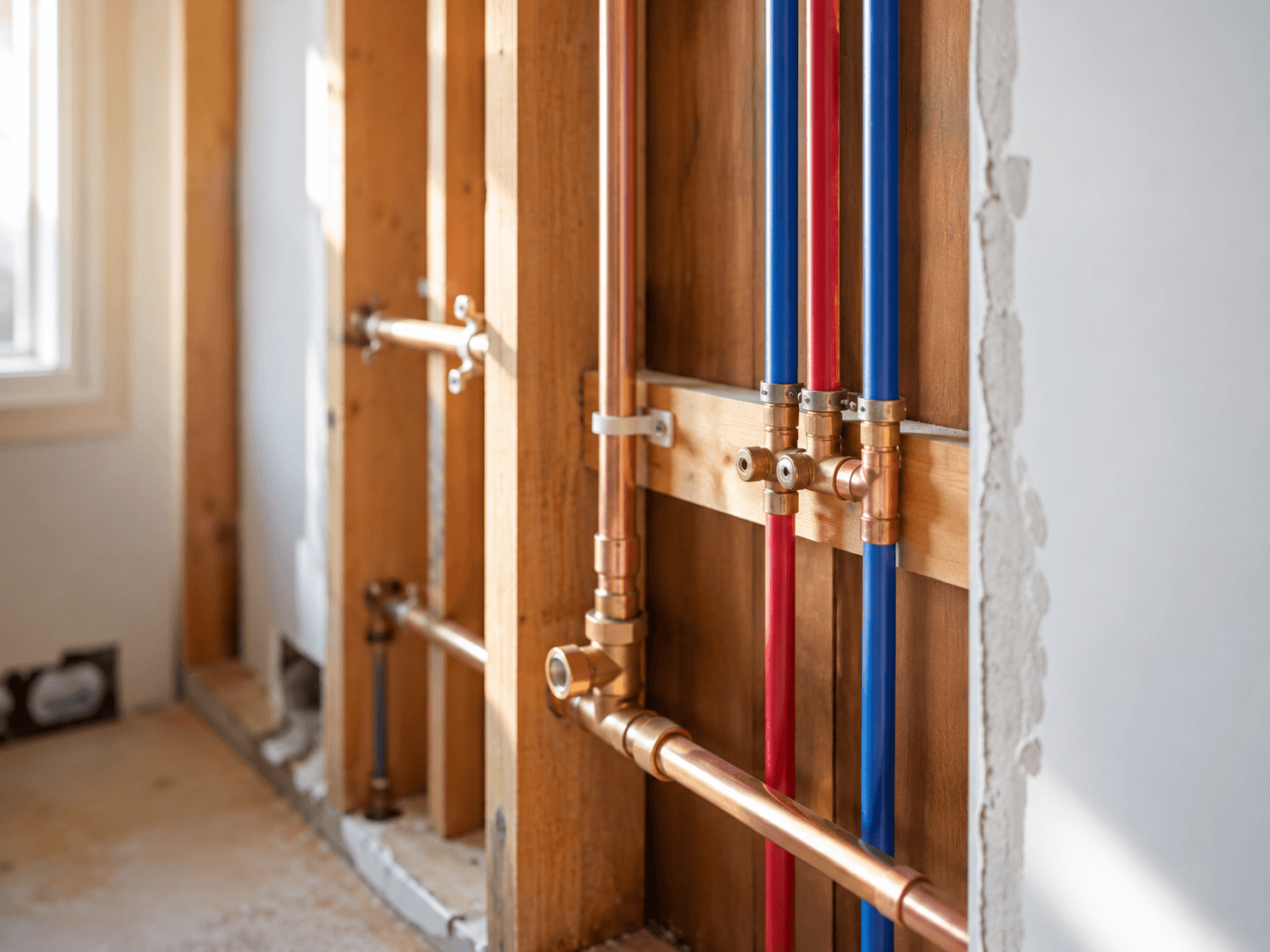
If the main valve is failing in an older home with galvanized or aging copper pipe, the rest of the system may be close behind. In that case, repiping can be the lasting fix. We'll explain your options and give you up-front pricing before any work begins.
Water leaking and can't get it shut off? First Call Plumbing & Restoration is open 24/7. Our emergency plumbing team typically arrives in 1-2 hours, depending on your location and call volume. Call (909) 751-2323 or contact us.
Frequently asked questions
Where is the main water shut-off valve on a California house?+
In most Southern California homes, it's outside on the front or side of the house where the water line comes up from the ground, often near a hose bib. Some homes have it in the garage or water heater closet. Condos may have it in a utility closet or under a sink.
Which way do I turn the main water valve to shut it off?+
For a round gate valve handle, turn it clockwise until it stops. For a lever-style ball valve, turn the lever a quarter turn so it sits across the pipe. When a ball valve lever lines up with the pipe, the valve is open.
Can I shut off my water at the meter?+
It depends on your water provider. The valve on the street side of the meter belongs to the provider, and many ask customers not to use it. Some homes have a customer valve on the house side of the meter. If you can't shut the water off at the house, call your provider's emergency line.
What if my main water shut-off valve won't turn?+
Don't force it with a long wrench, because an old valve can break and make the leak worse. Try gentle back-and-forth pressure. If it still won't move, use a customer valve at the meter if you have one, or call your water provider and a plumber.
How often should I test my main water shut-off?+
Testing it twice a year is a good habit. Close it, make sure the water stops at a faucet, then open it fully and check the stem for drips. If it's stuck or leaking, have it replaced before you need it in an emergency.
This guide is general information, not a quote or professional advice for your specific home or insurance policy. Prices are approximate - we give an up-front quote before any work begins.