
Quick answer
Homeowners insurance in California often covers the water damage from a sudden slab leak and the cost to break and replace the floor to reach the pipe, but usually not the pipe repair itself. Leaks caused by long-term corrosion, wear, or seepage are often excluded, so check your own policy wording.
You've confirmed a leak under your concrete slab. Maybe the water bill jumped, or the floor felt warm, or the leak detection report came back with a spot marked in tape on your tile. Now the big question: will insurance pay for any of this?
The honest answer is that a slab leak claim is really three separate questions: who pays to fix the pipe, who pays to get to the pipe, and who pays for the water damage. Insurance policies often treat each one differently. This guide walks through how that usually works in California, what adjusters look for, and how to document your claim. If you're not sure you have a slab leak yet, start with the signs of a slab leak.
The short answer: one leak, several answers
Here is how the pieces of a slab leak job are often treated under a standard homeowners policy. Your policy may differ, so use this as a list of questions to ask, not a promise.
| Part of the job | What it includes | How policies often treat it |
|---|---|---|
| The pipe repair | Fixing or replacing the leaking section of pipe | Often not covered. Many policies exclude the system or part that leaked. |
| Access (tear-out) | Breaking and patching the slab, plus removing and replacing flooring to reach the pipe | Often covered when the water damage is covered. Some policies cap it. |
| Resulting water damage | Wet flooring, baseboards, drywall, cabinets, and belongings | The part most likely to be covered, if the leak was sudden and accidental |
| Foundation damage | Cracking or movement of the foundation | Settling and cracking of foundations is commonly excluded |
| Mold | Mold growth from the moisture | Often limited by a dollar cap or excluded |
| Leak detection | Finding the exact location of the leak | Varies. Ask before you assume it's included. |
Sudden vs. gradual: the question behind most slab leak claims
Most homeowners policies are built to cover damage that is sudden and accidental. They usually do not cover damage that built up gradually, or problems caused by wear, deterioration, corrosion, or lack of maintenance.
That's what makes slab leaks hard. A pinhole in a copper line under your floor is hidden by design. It can leak for days or weeks before you notice anything. Many policies exclude continuous or repeated leakage, and some name a time frame, such as 14 days or more. Others handle long-term leaks through their wear-and-tear and neglect exclusions. Some policies treat hidden damage differently if you report it promptly once you find it.
Because the wording varies so much, the timing and cause of your leak - and how fast you acted once you found it - can decide the claim.
The pipe, the access, and the damage
Standard homeowners policy forms commonly say that if water damage from a plumbing system is covered, the insurer will pay the cost of tearing out and replacing any part of the building needed to repair the system the water escaped from. The same forms usually say they do not cover the system itself.
Here's what that can look like. Say a hot water line leaks under your kitchen tile. The policy might pay to cut the tile and concrete, patch the slab, and replace the flooring. It might pay to dry and repair the wet cabinets and baseboards. But the few feet of new copper pipe may be on you.
If you're choosing between a spot repair and a reroute, ask your adjuster how each option is treated before you decide. Policy language usually talks about tearing out to reach the pipe, and a reroute through walls or the attic may be handled differently. If your pipes are aging and you've had more than one leak, replacing them is generally treated as maintenance. A repipe can still be the right long-term fix.
Some insurers sell add-ons, such as service line coverage for buried pipes between the street and the house. If you have one, ask whether it reaches pipes under the slab.
What adjusters look for
Your insurer will assign an adjuster to review the claim. They may also send their own expert to inspect. For slab leaks, they commonly look at:
- What caused the pipe to fail. A sudden break reads differently than corrosion or wear that built up for years.
- How long it was leaking. Water bills, staining, rot, mineral buildup, and mold all give clues about timing.
- When you found it and how fast you acted. Prompt shutoff, reporting, and drying help show you protected the home.
- Whether the tear-out was necessary. A leak detection report showing the exact location supports the size of the opening.
- Whether the damage matches the leak. Moisture readings help connect wet materials to the leak and not to an older problem.
- Any pre-existing damage. Old stains or past repairs in the same area may be questioned.
How to document a slab leak claim
- Stop the water. Shut off the main valve, or the water heater's cold supply if the hot side is leaking.
- Get the leak located in writing. Ask for a report showing which line is leaking (hot or cold), the test results, and the location.
- Photograph and video everything before anything is opened, while the floor is open, and after the repair.
- Keep the failed section of pipe. The adjuster may want to see it.
- Pull your water bills for the past 12 months. A sudden jump can help show when the leak started.
- Ask for moisture readings and a written scope of drying and repairs.
- Report the claim promptly and write down your claim number.
- Keep a log of every call, email, and visit, plus every receipt.
- Don't throw out flooring or cabinets until the adjuster has seen them or says it's okay.
California claim timelines
California's Fair Claims Settlement Practices Regulations set time limits for insurers. In general, they must acknowledge your claim and begin any needed investigation within 15 calendar days of notice. They must accept or deny it within 40 calendar days after receiving proof of claim. If they need more time, they must tell you in writing why, and update you every 30 days. A denial must be in writing and explain the reasons, including the policy language it relies on.
If you have questions about how your claim is being handled, the California Department of Insurance consumer hotline is 1-800-927-4357. For more on general water damage coverage, read does homeowners insurance cover water damage in California.
How we help
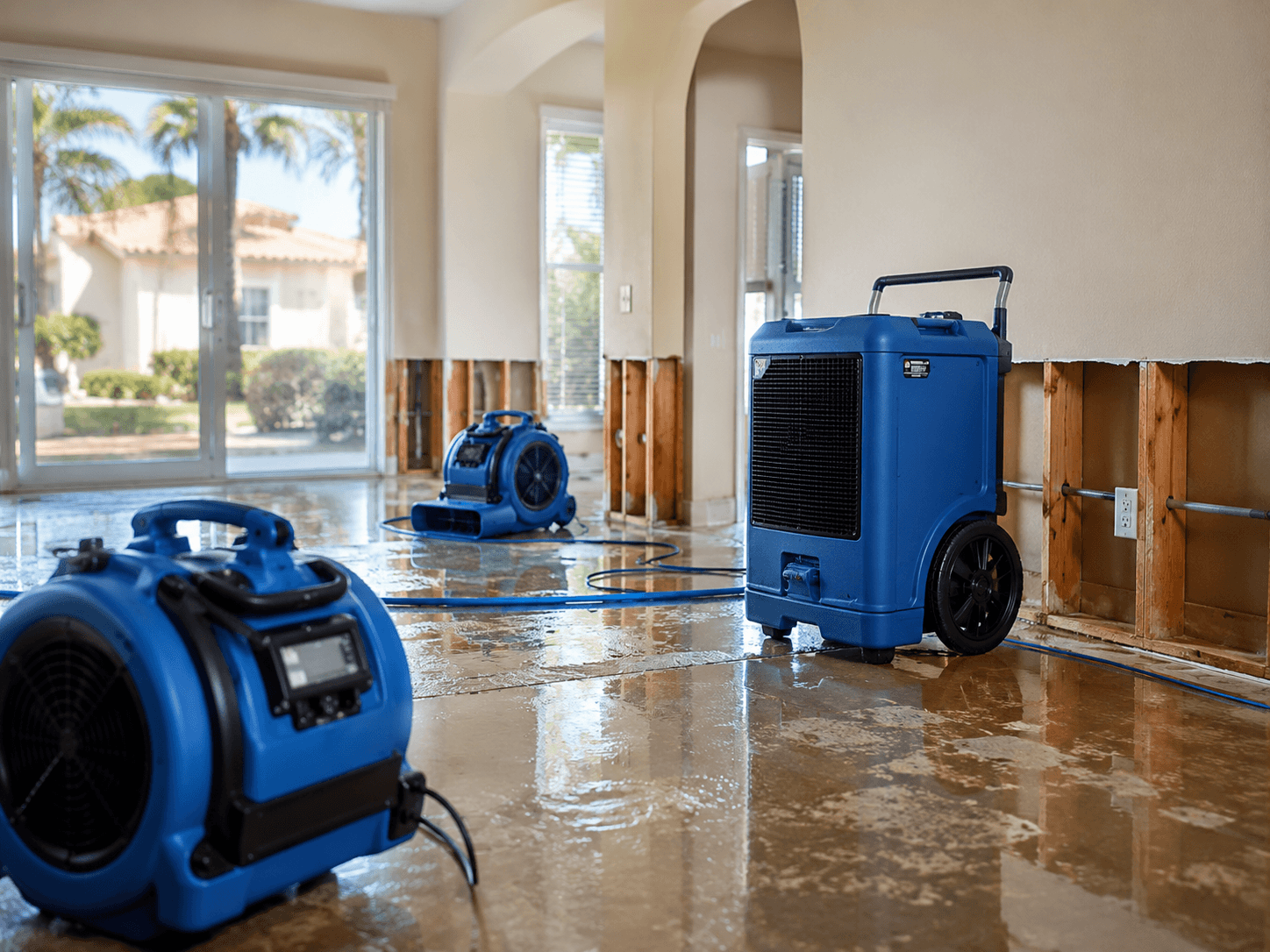
First Call Plumbing & Restoration handles both sides of a slab leak: locating and repairing the leak and drying and restoring the water damage. Our IICRC-certified restoration techs document the job as we work, with photos, moisture readings, and a written scope. We can share that documentation and work with your adjuster.
What we can't do is promise your claim will be approved. Coverage and settlement are between you and your insurance company. You'll get an up-front price from us, approved by you before work begins, whether insurance pays or not.
Found a slab leak? We're open 24/7. Call (909) 751-2323 or contact us to get the leak located, the water stopped, and the damage documented.
Frequently asked questions
Does homeowners insurance pay to fix the pipe under my slab?+
Often it does not. Many policies exclude the plumbing system or part that leaked, while still covering the water damage it caused and the cost to reach the pipe. Check your policy wording and ask your adjuster.
Will insurance pay to break up the floor to reach a slab leak?+
Many policies cover the cost of tearing out and replacing the parts of the home needed to reach the leaking pipe, when the water damage itself is covered. Some policies cap this amount, so ask your insurer how yours handles access.
Is a slab leak that has been leaking for weeks covered?+
It may not be. Many policies exclude continuous or repeated leakage, wear, and deterioration, and some name a time frame like 14 days. Some treat hidden leaks differently if you report them promptly, so report the claim as soon as you find the leak.
Does insurance cover foundation damage from a slab leak?+
Settling and cracking of foundations is commonly excluded under homeowners policies. If you are worried about the foundation, ask your insurer what your policy says and consider an evaluation by a qualified professional.
Should I fix the slab leak before the adjuster comes?+
Stop the water and start drying right away, since most policies require you to prevent further damage. Take photos first, keep the failed pipe and all receipts, and talk to your insurer before major permanent repairs if you can.
This guide is general information, not a quote or professional advice for your specific home or insurance policy. Prices are approximate - we give an up-front quote before any work begins.