Quick answer
Tankless is usually the better fit if you plan to stay long enough for its energy savings and 20+ year lifespan to matter, while a tank makes sense if you want the lowest upfront cost or a quick replacement. In Southern California, tankless conversions often need a bigger gas line and new venting, plus yearly descaling in hard water.
When a water heater starts leaking or reaches the end of its life, most homeowners face the same question: replace it with another tank, or switch to tankless? Both are good choices in the right home. The best one depends on your budget, how much hot water you use, your gas line and venting, and how hard your water is.
This guide walks through the real differences, with a focus on what matters for homes in the Inland Empire and the rest of Southern California.
How each type works
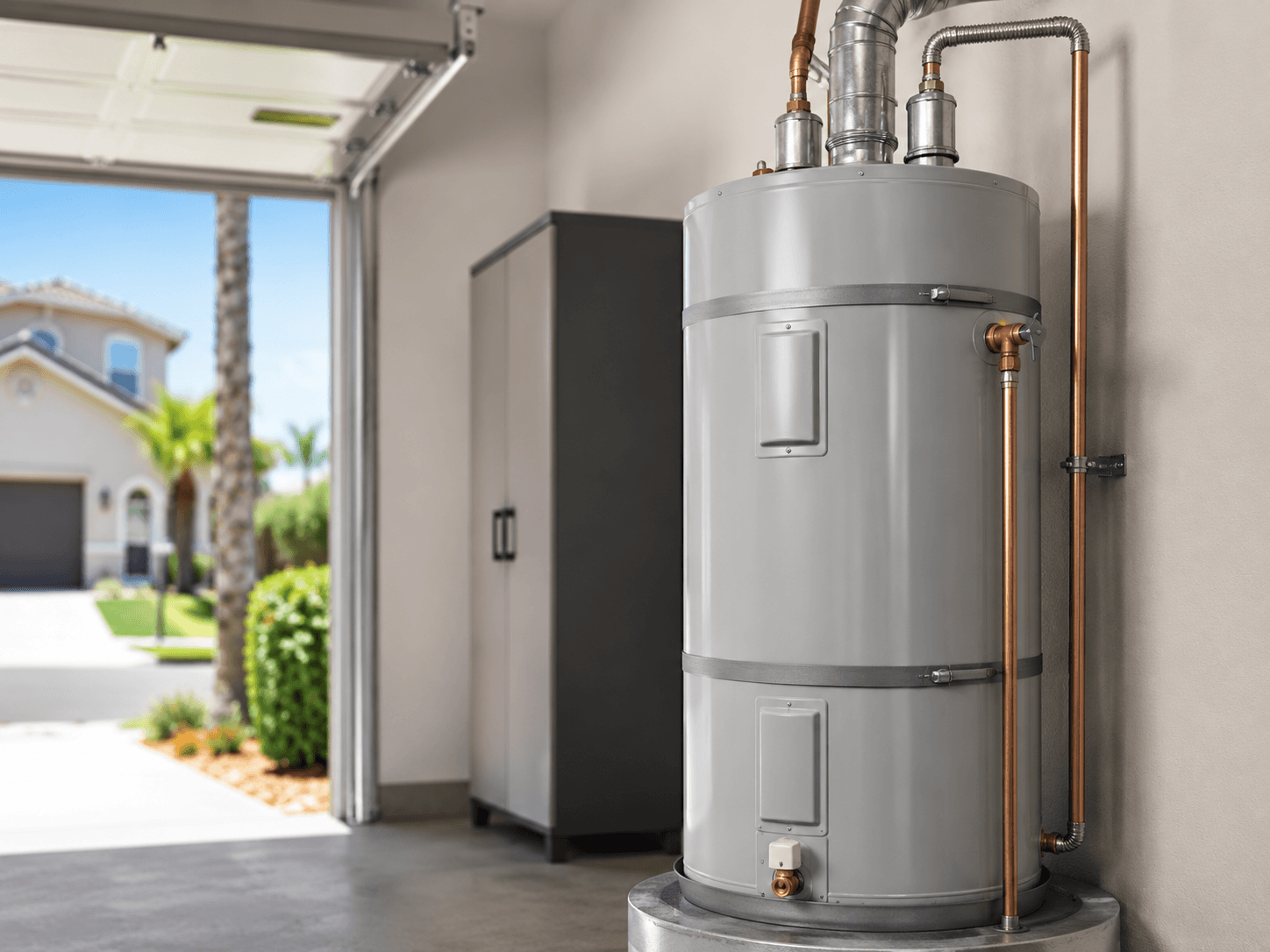
A tank (storage) water heater keeps a tank of water - often 40 or 50 gallons in a typical home - hot and ready all the time. When you use hot water, cold water refills the tank and the burner or element heats it back up. Because the water sits hot around the clock, the tank slowly loses heat even when no one is using it. This is called standby loss.
A tankless (on-demand) water heater has no tank. When you open a hot tap, water flows through a heat exchanger and is heated on the spot. It doesn't run out the way a tank does, but it can only heat so many gallons per minute at once. The U.S. Department of Energy says tankless units typically deliver about 2 to 5 gallons per minute, with gas models usually delivering more than electric ones.
Tank vs tankless at a glance
| Tank (storage) | Tankless (on-demand) | |
|---|---|---|
| Typical installed cost (national guides) | About $880 - $1,830 for a replacement (Angi, 2026) | About $1,400 - $3,900 (HomeAdvisor, 2026), before any gas, vent, or electrical upgrades |
| Energy efficiency | Loses some heat to standby loss | About 24% - 34% more efficient for homes using 41 gallons or less a day; 8% - 14% for heavy users (U.S. DOE) |
| Typical lifespan | About 10 - 15 years (U.S. DOE) | 20+ years (U.S. DOE) |
| Hot water supply | Limited by tank size; can run out | Continuous, but limited by flow rate |
| Space | Large tank in garage or closet | Compact, wall-mounted |
| Hard water upkeep | Sediment settles in tank; flush periodically | Scale builds in heat exchanger; descale at least yearly |
| Swap-in difficulty | Usually a direct replacement | Often needs a larger gas line, new venting, and new mounting |
Cost figures are national averages from published cost guides and are approximate. Prices in Southern California can be higher, and your home's setup matters more than any average. We always give an up-front quote before work begins.
Upfront cost: why tankless costs more to install
Replacing a tank with another tank is usually simple: the gas line, vent, and water connections are already in place. Switching from a tank to tankless often isn't a simple swap. Three upgrades come up often:
1. A bigger gas line
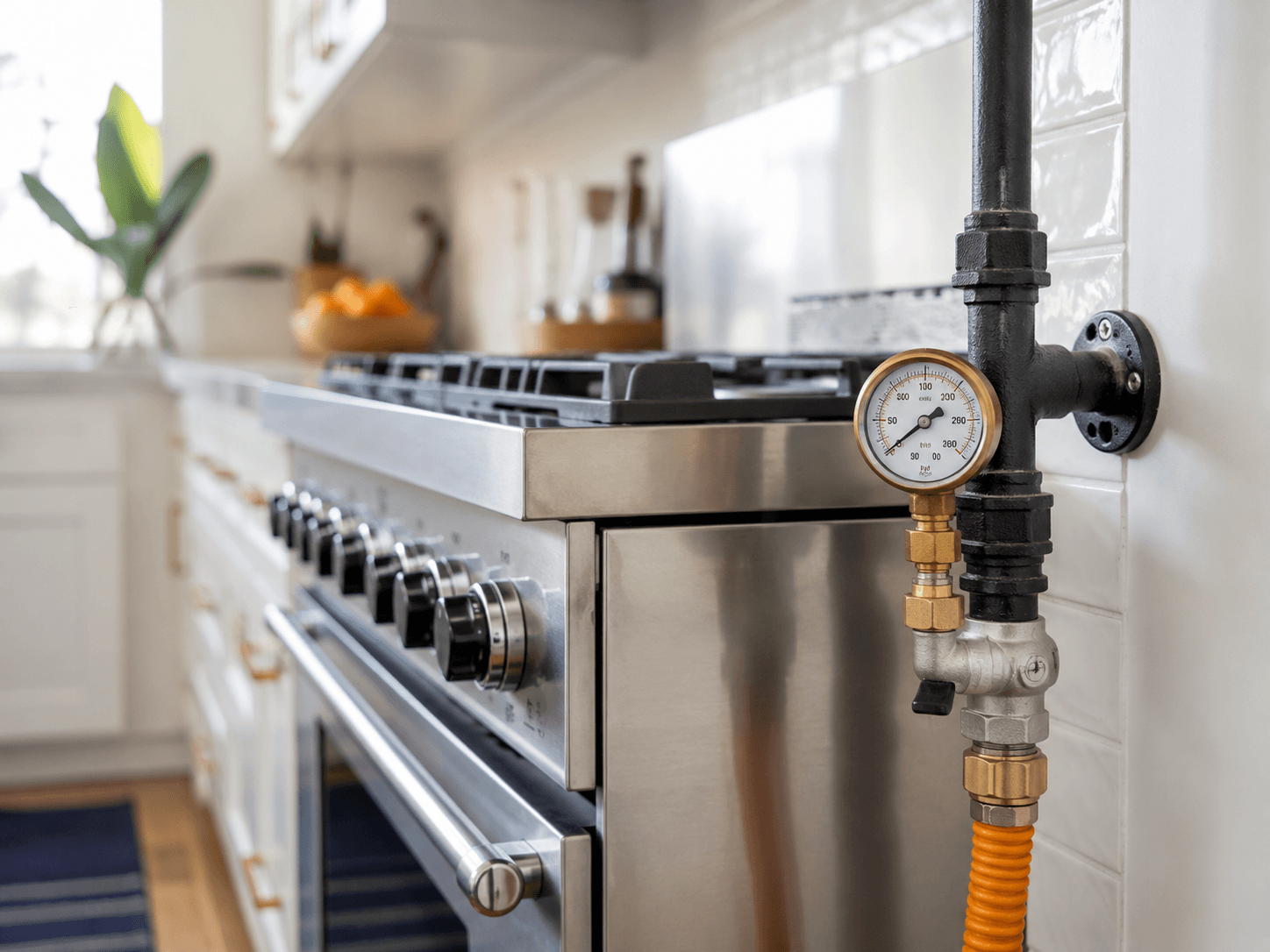
A tankless heater needs a lot of gas for a short time. Many whole-house gas tankless units are rated up to about 199,000 BTU per hour, which is several times what a typical residential tank burner uses. The existing 1/2-inch line to a tank heater is often too small, so the line may need to be upsized - commonly to 3/4-inch or larger, depending on length and the other gas appliances in the home. The gas meter also has to be able to supply everything running at once. Our gas line services team handles this as part of the install when needed.
2. New venting
Gas tankless units generally can't reuse an old tank vent. Condensing models are usually vented with PVC pipe, while non-condensing models need special stainless steel venting. Where the unit goes - garage wall, inside, or outdoors - affects how much venting work is required.
3. Electrical work (for electric tankless)
Whole-house electric tankless heaters draw a large amount of power. Many need dedicated 240-volt circuits with high amperage, and some homes need a panel or service upgrade to support them. Most gas units also need a standard electrical outlet for their controls.
Efficiency and operating cost
Because a tankless heater only runs when you're using hot water, it avoids standby loss. According to the U.S. Department of Energy, that makes tankless heaters about 24% to 34% more energy efficient than tank heaters in homes that use 41 gallons or less of hot water a day, and about 8% to 14% more efficient in homes that use a lot of hot water (around 86 gallons a day).
In plain terms: a smaller household tends to see bigger percentage savings. Whether the savings pay back the higher install cost depends on your gas or electric rates, how long you stay in the home, and how much the conversion costs at your address.
Lifespan
The Department of Energy puts tank water heaters at about 10 to 15 years and most tankless units at more than 20 years. In real homes, both depend heavily on water quality and maintenance. Hard water shortens the life of both if it's ignored.
Hard water: the Inland Empire factor
Most Inland Empire homes have hard to very hard water. Our guide to hard water in the Inland Empire covers local numbers and how to look up yours. Hard water affects each type differently:
- Tank heaters: minerals settle as sediment at the bottom of the tank. You may hear popping or rumbling, and the heater works harder. Flushing the tank regularly helps.
- Tankless heaters: scale forms inside the narrow passages of the heat exchanger. This can reduce flow, set off error codes, and shorten the unit's life. Manufacturers such as Navien recommend descaling at least once a year, and more often with hard water. A service valve kit makes descaling much easier.
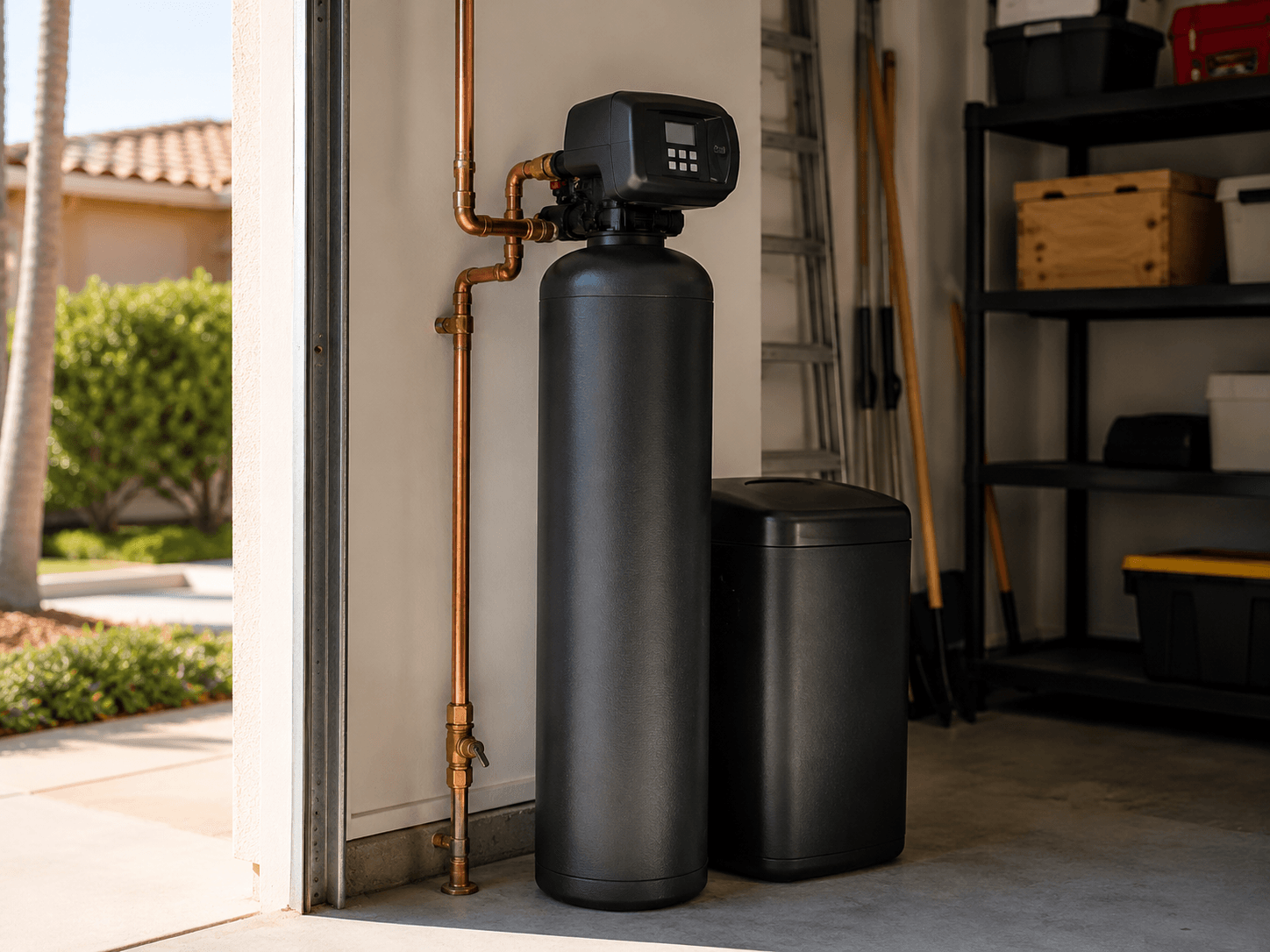
If you're going tankless in a hard water area, it's worth considering scale protection, such as a water softener or exchange-tank softener service. Note that some local agencies restrict self-regenerating salt softeners, so check your city's rules first.
California rules to know
- Earthquake strapping is required. California Health and Safety Code section 19211 requires new, replacement, and existing residential water heaters to be braced, anchored, or strapped so they won't fall or shift in an earthquake. For tank heaters, the plumbing code calls for straps in the upper third and lower third of the tank, with the lower strap at least 4 inches above the controls.
- Sellers must certify it. When you sell a home with a water heater, state law requires you to certify in writing to the buyer that the heater is properly braced.
- Permits. Most cities and counties require a permit to replace a water heater, and a conversion to tankless often involves gas, venting, or electrical work that is inspected too. A licensed plumber should pull the permit.
- Air quality rules for gas heaters. Gas water heaters sold in the South Coast Air Quality Management District, which covers the urban western parts of Riverside and San Bernardino counties, must meet nitrogen oxide (NOx) limits. In June 2025 the district's board voted not to adopt proposed rules that would have moved new residential water heaters toward zero-emission units. Rules can change, so ask about current requirements when you buy.
When a tank makes sense
- You need a replacement quickly and want the lowest upfront cost
- Your gas line and venting can't easily be upgraded
- Your household uses lots of hot water at the same time, and a large tank covers it well
- You may sell the home in the next few years
When tankless makes sense
- You plan to stay in the home long enough for energy savings and longer life to matter
- You want endless hot water for back-to-back showers
- You want to free up garage or closet space
- Your gas line can be upsized and venting is practical
- You're willing to descale it yearly or treat your hard water
Get a straight answer for your home
We install both tank and tankless water heaters across Riverside and San Bernardino counties. We'll check your gas line, venting, water hardness, and hot water needs, explain your options, and give you an up-front quote. Learn more about our water heater replacement service.
Call First Call Plumbing & Restoration at (909) 751-2323 - we're available 24/7 - or request service online.
Frequently asked questions
How much more does a tankless water heater cost than a tank?+
National cost guides put a typical tank replacement at roughly $880 to $1,830 and a tankless installation at roughly $1,400 to $3,900, and converting from a tank can add gas line, venting, or electrical work. Prices vary a lot by home and region, so the best number is an up-front quote based on your setup.
Do tankless water heaters work well with hard water?+
They work, but hard water causes scale to build up in the heat exchanger. Manufacturers recommend descaling at least once a year, and more often with hard water. Many Inland Empire homeowners pair a tankless heater with water softening to reduce scale.
Do I need a bigger gas line for a tankless water heater?+
Often, yes. Many whole-house gas tankless units are rated up to about 199,000 BTU per hour, far more than a typical tank, so the old 1/2-inch line is frequently too small. A plumber should check the line size, length, and total gas load before installing.
Does a water heater need earthquake straps in California?+
Yes. California Health and Safety Code section 19211 requires residential water heaters to be braced, anchored, or strapped against earthquake motion. Tank heaters need straps in the upper and lower thirds of the tank, and sellers must certify compliance in writing when they sell a home.
How long do tank and tankless water heaters last?+
The U.S. Department of Energy estimates about 10 to 15 years for tank heaters and more than 20 years for most tankless units. Hard water and skipped maintenance can shorten the life of either type.
This guide is general information, not a quote or professional advice for your specific home or insurance policy. Prices are approximate - we give an up-front quote before any work begins.