Quick answer
Low water pressure in a house is usually caused by a failing pressure regulator, a partly closed valve, hard-water scale or old galvanized pipe, a hidden leak, or a problem on the water provider's side. If only one fixture is weak, the usual cause is a clogged aerator or showerhead, a worn cartridge, or a partly closed stop valve.
A shower that barely sprays, a kitchen faucet that trickles, or a toilet that takes forever to refill - low water pressure is annoying. Sometimes it's a five-minute fix. Sometimes it's a sign of a failing part or a hidden leak.
The first step is always the same: figure out whether the problem is at one fixture or the whole house. That one answer cuts the list of causes in half.
Low pressure at one fixture
When only one faucet or shower is weak, the cause is almost always close by:
- A clogged aerator or showerhead. Hard water leaves mineral scale that slowly blocks the small holes. Unscrew the aerator or showerhead, rinse out any grit, and soak it in white vinegar to loosen scale.
- A worn or clogged cartridge. The cartridge inside a faucet or shower valve can wear out or catch debris, especially after work on the water lines.
- A partly closed stop valve. Check the small valves under the sink or behind the toilet. They should be fully open.
- A kinked or failing supply line. The flexible line from the stop valve to the faucet can kink or break down inside.
Newer faucets and showerheads are also designed to use less water. If a new fixture feels weaker than the old one, it may be working exactly as designed.
Low pressure in the whole house: 6 common causes
1. A failing pressure regulator
Many Southern California homes have a pressure regulator, also called a PRV. It's a bell-shaped brass valve on the main line, usually right after the main shut-off. It lowers high street pressure to a safer level for your pipes. The California Plumbing Code calls for a regulator when static pressure is above 80 psi.
Regulators wear out. When one fails, pressure can drop suddenly across the whole house. A failing regulator can also go the other way and let pressure run too high, which can cause banging pipes or a dripping water heater relief valve. How long a regulator lasts depends a lot on water conditions.
2. A valve that isn't fully open
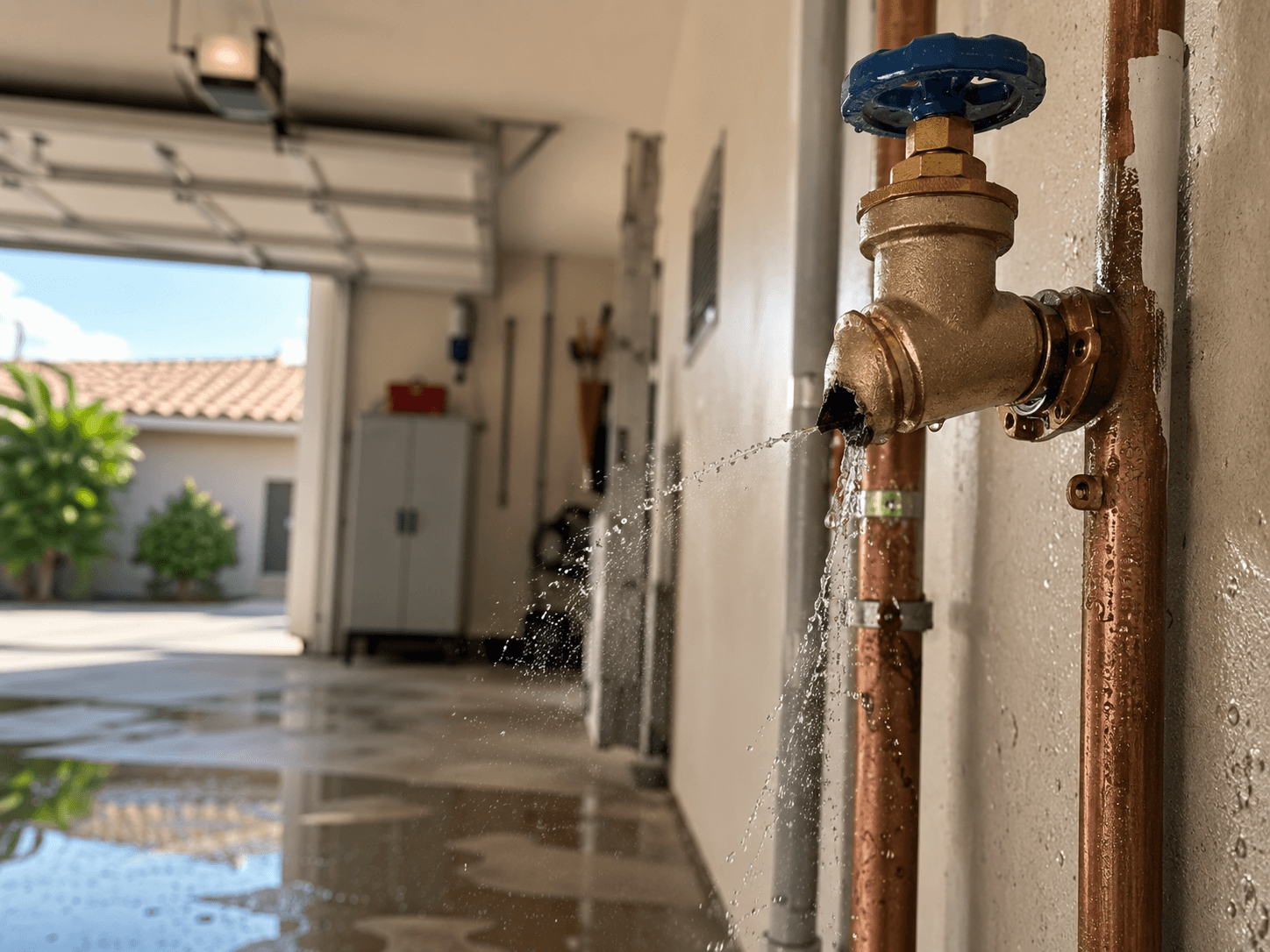
This is one of the easiest causes to miss. If someone recently shut off the water for a repair, the main shut-off or a valve in the meter box may not have been opened all the way. Check that the main valve is fully open. Our guide to the main water shut-off valve shows where to find it and how it works.
3. Hard water scale and old galvanized pipe
Many older homes still have galvanized steel water lines. Over the years, these pipes corrode and build up rust and scale on the inside, which narrows the opening. Pressure fades slowly, and it's often worst at the fixtures farthest from the main. Rusty or brown water is another clue.
Hard water adds to the buildup in pipes, valves, and fixtures. Water across much of our area is hard - see hard water in the Inland Empire. When old galvanized pipe is the cause, cleaning fixtures won't fix it for long. Repiping is usually the lasting fix.
4. A hidden leak or slab leak
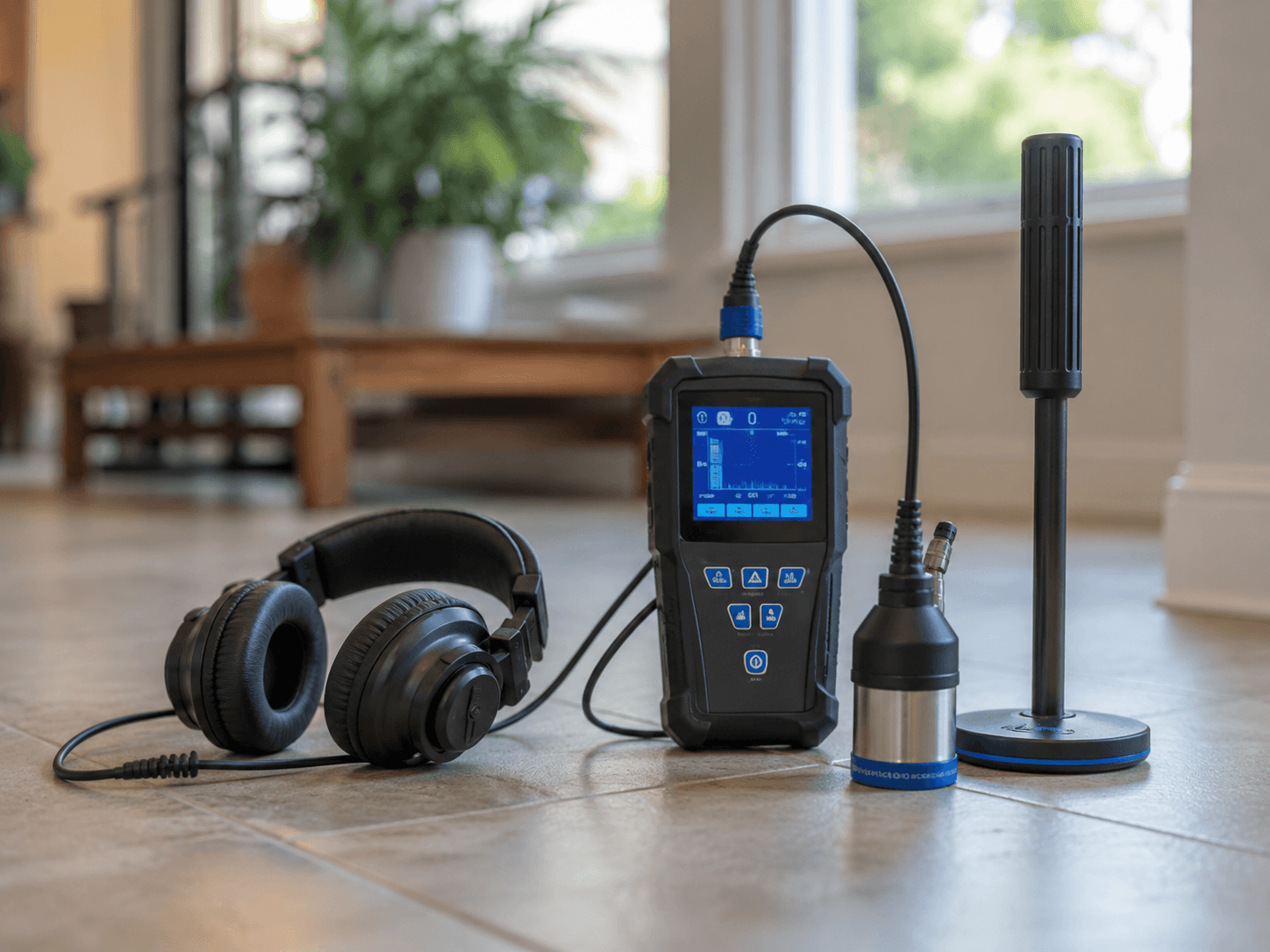
If water is escaping from a broken pipe, less of it reaches your faucets. A leak under the concrete slab can run for weeks before you see water. Watch for a higher water bill, warm spots on the floor, or the sound of running water when everything is off. See the signs of a slab leak for a simple water meter test.
5. A clogged whole-house filter or softener
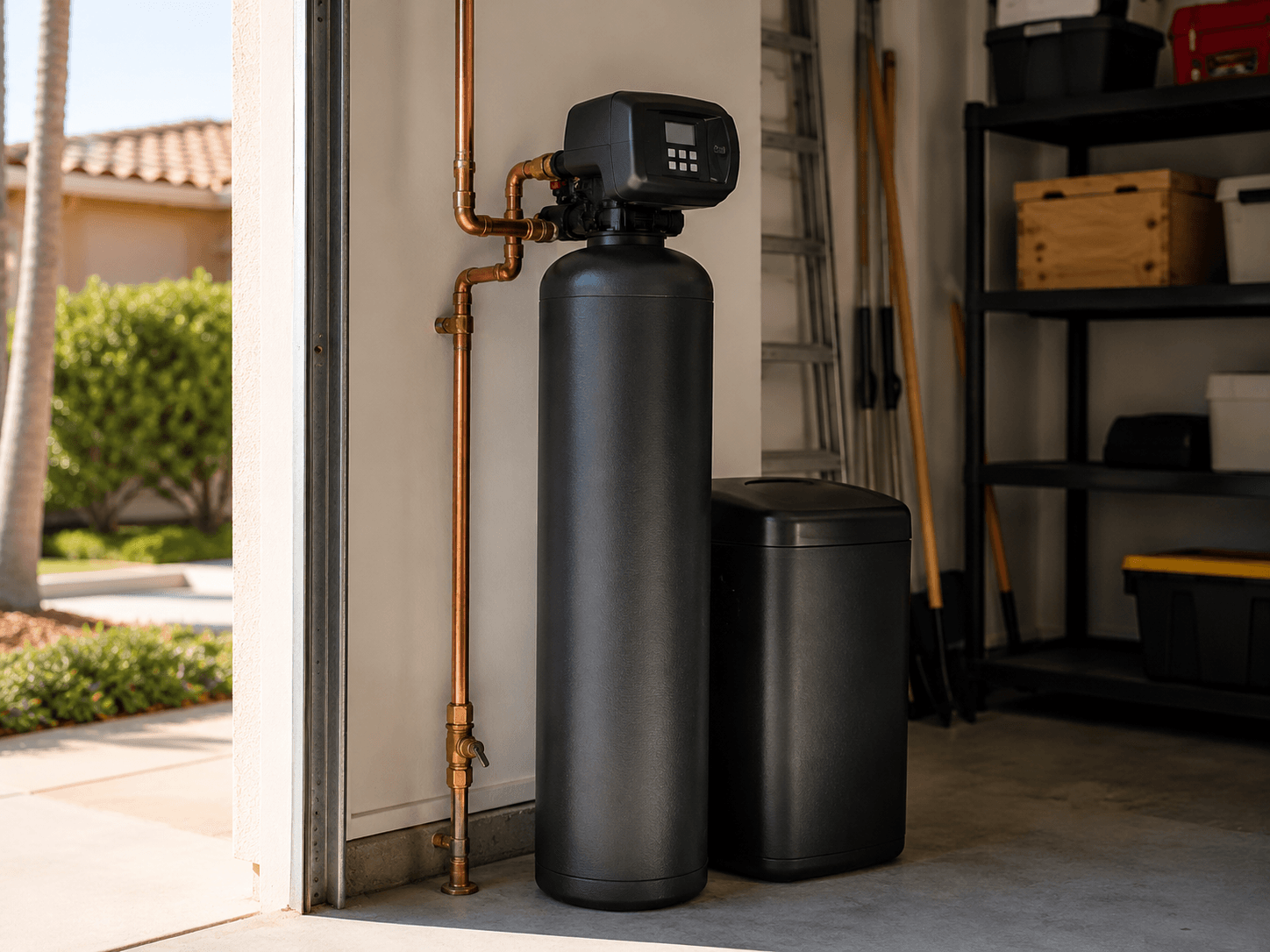
If you have a whole-house filter, a clogged cartridge can choke the flow to the entire house. A softener with a problem can do the same. If your system has a bypass valve, try putting it in bypass. If pressure comes back, the equipment needs service.
6. A problem on the water provider's side
Sometimes the cause isn't in your home at all. A water main break, work in the street, or a problem in the meter box can all lower pressure. Ask a neighbor if their pressure is low too, and check your water provider's website or call them.
Only the hot water is weak?
If the cold side is fine but the hot side is weak, the cause is usually at the water heater. Check that the valve on the cold water pipe going into the heater is fully open. Sediment and scale inside the tank or its fittings can also restrict flow. A leak on a hot water line can lower hot side pressure too, and may show up as a warm spot on the floor.
How to test your water pressure with a hose-bib gauge
A water pressure gauge that screws onto a hose bib costs little at most hardware stores. It gives you a real number instead of a guess.
- Turn off all water use in and around the house: faucets, toilets, the washer, dishwasher, ice maker, and sprinklers.
- Pick your hose bib. Here's the catch: some outdoor faucets connect to the line before the pressure regulator, so they show street pressure, not house pressure. A hose bib on the far side of the regulator, or a laundry faucet with hose threads, shows what your house actually gets. If you can, test one of each.
- Screw on the gauge by hand and open the hose bib all the way.
- Read the gauge. With nothing running, this is your static pressure.
- Watch it under flow. Have someone open a faucet inside. A small drop is normal. A big drop points to a restriction in the pipes or a valve.
- Check for spikes. If your gauge has a second red needle that stays at the highest reading, leave it on overnight. A high max reading can mean a failing regulator or pressure building from the water heater.
| What you see | What it may mean | Next step |
|---|---|---|
| Over 80 psi on the house side | Regulator missing, failed, or set too high | Have the regulator checked or replaced. The plumbing code calls for one above 80 psi. |
| Low on the house side, higher on the street side | Regulator failing or set too low | Have a plumber adjust or replace the regulator. |
| Low on both sides of the regulator | Supply problem, a partly closed valve, or a leak on the service line | Check the main valve, run a meter test, and call your water provider. |
| Good static reading but weak flow | Restriction from scale, old pipe, a clogged filter, or a partly closed valve | Check filters and valves, then have the pipes looked at. |
| Max needle jumps high overnight | Failing regulator or pressure building as the water heater heats | Have a plumber check the regulator and the water heater setup. |
When to call a plumber
- Pressure dropped suddenly in the whole house and the main valve is fully open.
- Your gauge reads over 80 psi on the house side.
- You have low pressure along with a high water bill, warm floors, or the sound of running water.
- Your home has galvanized pipe and pressure keeps getting worse.
- You see rusty water, or the regulator is leaking or very old.
We'll test your pressure on both sides of the regulator, check for leaks, and explain what we find. You'll get up-front pricing approved before any work begins, whether it's a regulator, slab leak detection, or a repipe.
Pressure suddenly gone? First Call Plumbing & Restoration is open 24/7. Call (909) 751-2323 or contact us to schedule a visit.
Frequently asked questions
Why is my water pressure suddenly low in the whole house?+
A sudden whole-house drop is often caused by a failing pressure regulator, a main valve that wasn't fully reopened after a repair, a leak, or a problem on the water provider's side such as a main break. Ask a neighbor if their pressure is low too, then check your main valve.
What is normal water pressure for a house?+
Most household fixtures work well at around 50 psi. The California Plumbing Code calls for a pressure regulator when static pressure is above 80 psi, so a reading over 80 on the house side means the regulator should be checked.
Can a slab leak cause low water pressure?+
Yes. When water escapes from a broken pipe under the slab, less reaches your fixtures. A slab leak may also show up as a higher water bill, warm spots on the floor, or the sound of running water. A water meter test can help confirm a leak.
Can a water softener or filter cause low water pressure?+
Yes. A clogged whole-house filter cartridge or a softener with a problem can restrict flow to the whole house. If your system has a bypass valve, put it in bypass. If pressure improves, the equipment needs service or a new cartridge.
How long does a water pressure regulator last?+
There is no set lifespan. Water conditions make a big difference, so some regulators fail within a few years and others last much longer. Testing your pressure with a gauge once in a while is the easiest way to catch a problem early.
This guide is general information, not a quote or professional advice for your specific home or insurance policy. Prices are approximate - we give an up-front quote before any work begins.