Quick answer
Water mitigation is the emergency work that stops water damage from getting worse - extraction, removing soaked materials, and drying. Water damage restoration is the repair work that follows - replacing drywall, flooring, cabinets, and paint so the home is back to its pre-loss condition. Mitigation comes first; restoration starts once everything is dry.
After a leak or flood, you will probably hear two words used over and over: mitigation and restoration. Your insurance adjuster may use them one way, a contractor another, and a website a third. It can get confusing fast, especially when you are already dealing with a wet house.
The difference matters. It affects what happens in your home, in what order, how the work is billed, and how your insurance claim is handled. This guide breaks it down in plain terms.
Side-by-side comparison
| Water mitigation | Water damage restoration (rebuild) | |
|---|---|---|
| Goal | Stop the damage from getting worse | Return the home to its pre-loss condition |
| When | Immediately, ideally within hours | After drying is confirmed with moisture readings |
| Typical work | Extraction, tear-out, drying, cleaning, moisture monitoring | Drywall, texture, paint, flooring, cabinets, trim |
| Typical length | Often several days | Days to several weeks, depending on scope |
| Key records | Photos, moisture readings, drying logs, equipment list | Repair estimate, materials, change orders |
What water mitigation includes
Mitigation is the emergency phase. Its job is damage control - keep the water from spreading, keep materials from getting worse, and lower the risk of mold. A typical mitigation job goes like this:
- Stop the source. A broken pipe, failed supply line, or leaking water heater has to be fixed or shut off first. Drying a house with an active leak does not work.
- Inspect and map the moisture. Techs use moisture meters to find where water went, including under flooring and inside walls.
- Classify the water. The IICRC S500 standard sorts water by contamination (Category 1, 2, or 3) and by how much there is and how hard it will be to dry (Class 1 to 4). This shapes the whole plan.
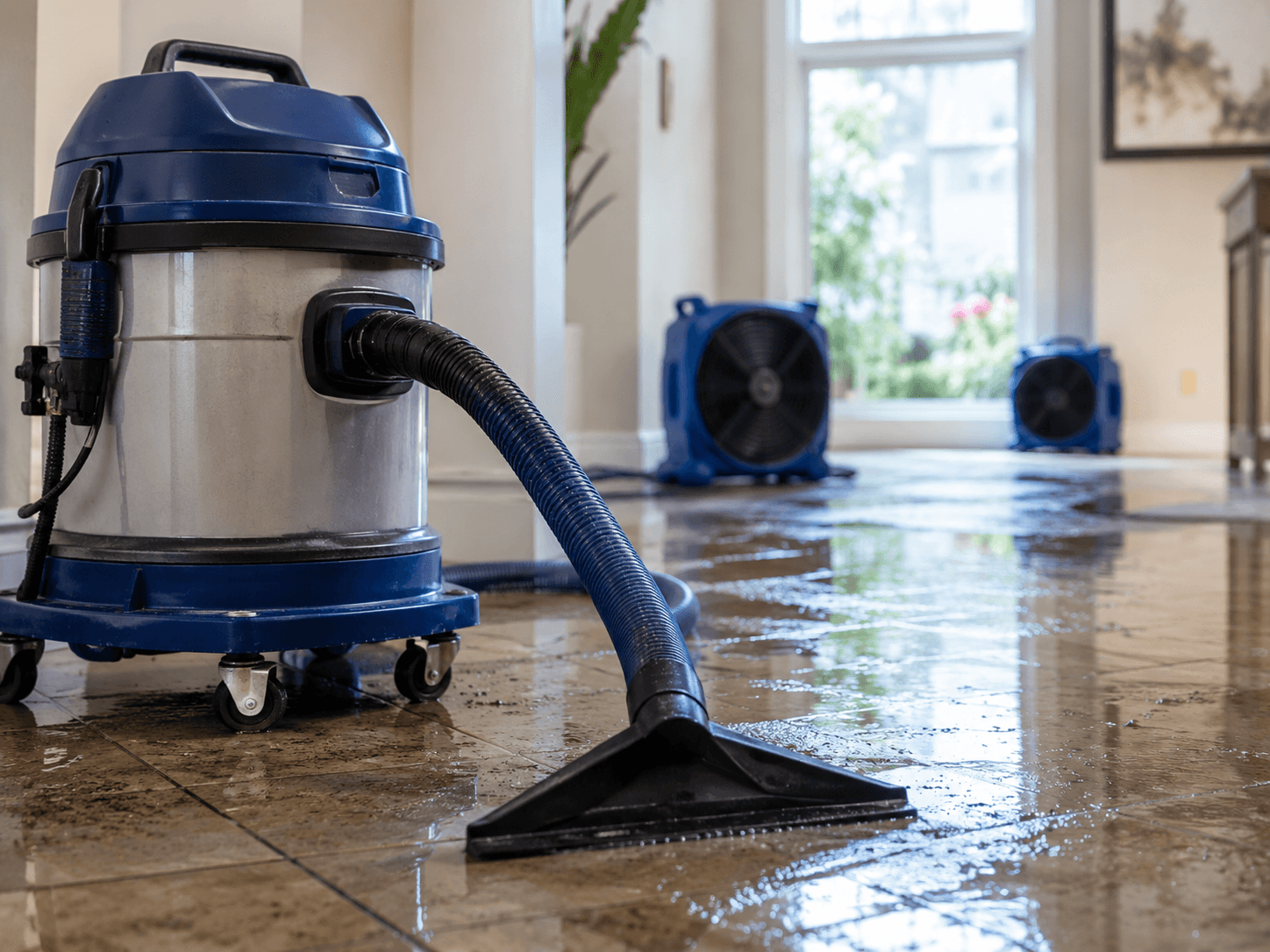
- Extract standing water from carpet, pad, and hard floors.
- Remove what cannot be saved, like soaked carpet pad, swollen baseboards, or wet drywall at the bottom of walls. Contaminated materials from sewage or floodwater are removed, not dried.
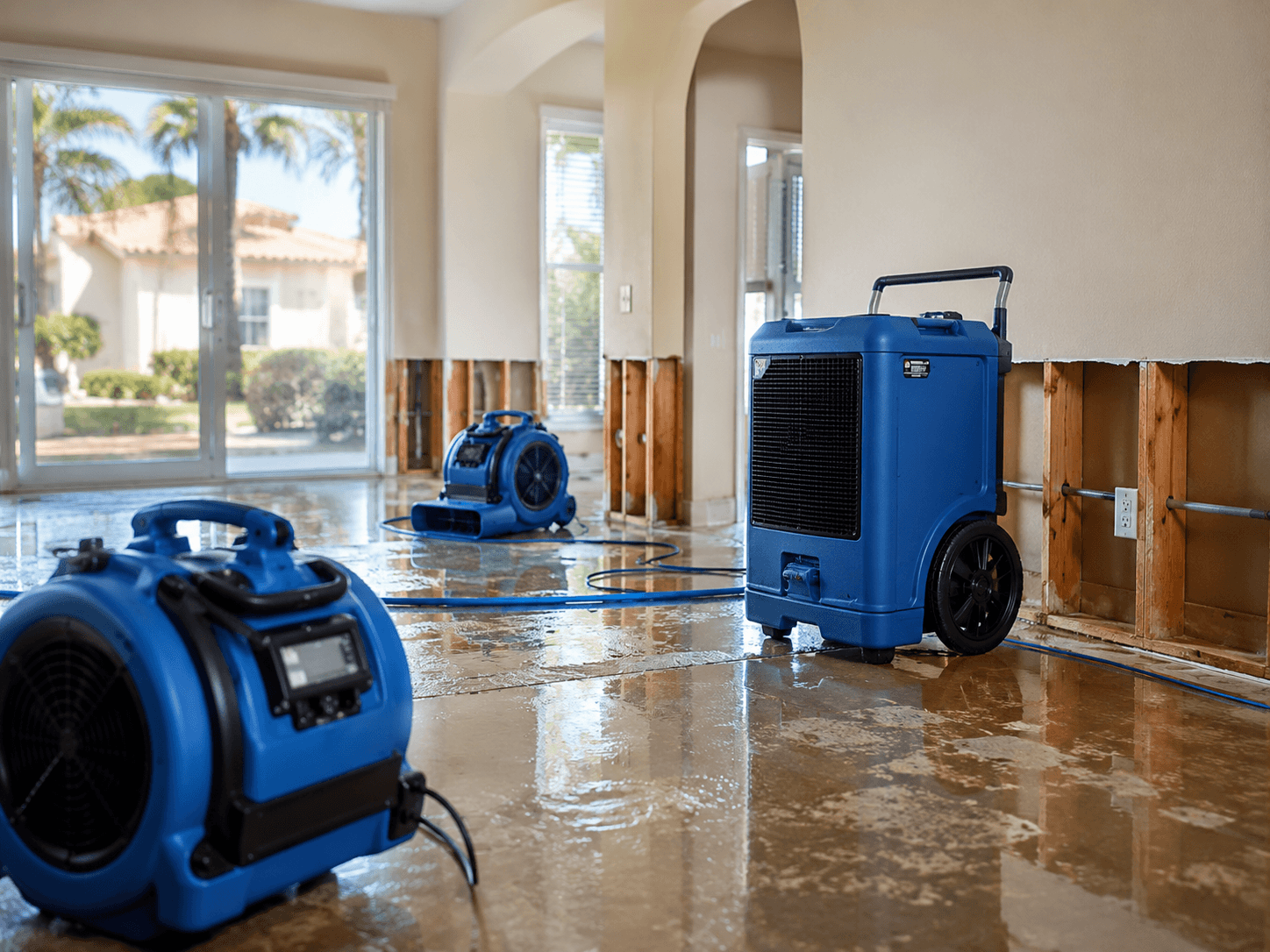
- Set up drying equipment - commercial dehumidifiers and air movers placed to dry the structure, not just the air.
- Clean and treat affected surfaces, especially after Category 2 or 3 water.
- Monitor daily until materials reach dry goals.
Mitigation also includes protective steps like tarping an opening after a storm or moving belongings out of harm's way. For how long each phase usually takes, see how long water damage restoration takes.
What water damage restoration includes
Restoration - often called reconstruction or rebuild - is putting the home back together after it is dry. It can include:
- Hanging, taping, and texturing new drywall to match the rest of the room.
- Priming and painting walls and ceilings, including stain-blocking primer where needed.
- Installing new flooring, carpet, or pad.
- Replacing baseboards, trim, and doors.
- Repairing or replacing cabinets and countertops.
- Reinstalling fixtures and appliances that were moved or disconnected.
Our reconstruction and rebuild team handles this phase. A good rebuild should be hard to spot - matching textures, colors, and finishes takes care.
Why the words get mixed up
Part of the confusion is that "water damage restoration" is used two ways. In the narrow sense, it means the rebuild phase. In everyday use, it often means the whole process from extraction to the final coat of paint. That is how many companies, including ours, name the service. When you talk to a contractor or adjuster, ask which part they mean so everyone is on the same page.
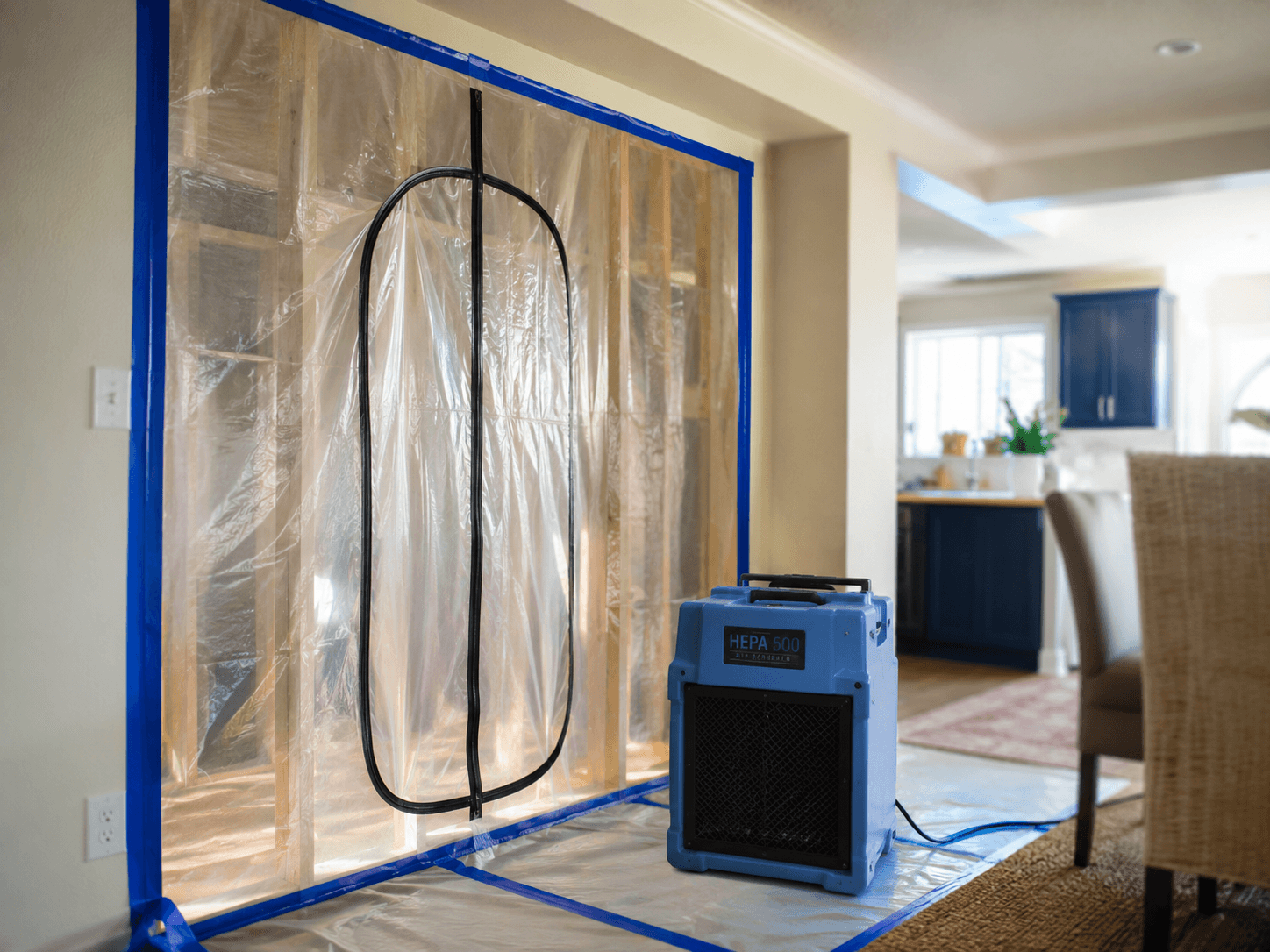
There is also remediation, which usually refers to mold. Mold remediation uses containment and specific removal steps, and it is separate from basic drying. If mold is found during mitigation, it is typically handled before the rebuild starts.
Why insurers care about prompt mitigation
Most homeowners policies include a list of duties after a loss. One common duty is to protect the property from further damage and make reasonable, necessary repairs to do so. The California Department of Insurance notes that a policy may not cover additional damage if you did not take reasonable steps to prevent it.
In practice, that means you generally should not wait for the adjuster to visit before stopping the leak and starting to dry. Water that sits spreads, wicks up walls, and can lead to mold - damage an insurer may argue could have been avoided. At the same time, it is usually wise to hold off on permanent repairs until the adjuster has seen the damage.
- Do right away: stop the water, photograph everything, start extraction and drying, save receipts.
- Keep: failed parts, like a burst supply line, and samples of removed flooring if your insurer asks.
- Wait on: permanent rebuild work until your insurer has had a chance to inspect.
Every policy is different, so read yours or ask your agent. Our guide to homeowners insurance and water damage in California covers what is usually covered and excluded.
One company or two?
Some homeowners use one company for mitigation and a different contractor for the rebuild. Others use one team for both. Both can work. Here is what to weigh:
| One team for both | Separate companies |
|---|---|
| One point of contact from start to finish | You coordinate between two or more companies |
| Drying records and rebuild scope come from the same team | The rebuild contractor relies on someone else's records |
| No gap waiting for a new contractor to schedule | Possible wait between drying and repairs |
| Fewer chances for blame between crews | More freedom to shop each phase separately |
There is often a third trade involved too: the plumber who fixes the leak. At First Call Plumbing & Restoration, our licensed plumbers fix the source, and our IICRC-certified techs handle mitigation, drying, mold remediation, and reconstruction - one team from the first call to the final walkthrough.
In California, insurance regulations say an insurer cannot require you to use a specific contractor for repairs. Your insurer may suggest companies, but the choice is yours.
How billing and documentation usually work
Mitigation and rebuild are usually estimated and billed as separate parts of the job, even when one company does both. Mitigation is based largely on what was done to dry the home - labor, extraction, materials removed, disposal, and how many drying units ran for how many days. Rebuild is priced more like a remodeling estimate: materials and labor for each repair.
Many insurers and restoration contractors use estimating software such as Xactimate, which lists work line by line. That makes it easier for an adjuster to compare a contractor's estimate to their own. For a sense of what drives the total, see water damage restoration cost.
Good documentation is what holds it all together. For mitigation, that means:
- Photos and video of the damage before, during, and after work.
- The water category and class, and why.
- Daily moisture readings at marked spots and a dry reference for comparison.
- A list of drying equipment and how long each unit ran.
- What was removed and why it could not be dried.
We provide this documentation - photos, moisture readings, and a written scope - and we can work with your adjuster. We do not promise approval or direct billing. Your deductible and the settlement are between you and your insurer.
Questions to ask any water damage company
- Are your techs IICRC-certified? What is your contractor license number? (Ours is CSLB Lic. #798425.)
- Will you fix the leak, or do I need a separate plumber?
- Do you handle the rebuild, or only mitigation?
- How will you show me the area is dry before repairs start?
- Will I get photos, moisture logs, and a written scope for my insurer?
Whether you need fast mitigation tonight or a plan for the full rebuild, we can help. First Call Plumbing & Restoration is open 24/7 from our San Bernardino office. Call (909) 751-2323 or contact us to stop the damage and start putting your home back together.
Frequently asked questions
Is water mitigation the same as water damage restoration?+
Not exactly. Mitigation is the emergency work to stop damage from spreading, like extraction and drying. Restoration is the repair work that follows. Many companies use water damage restoration to describe the whole process, so ask which part a quote covers.
Does insurance pay for water mitigation?+
When the loss is covered, mitigation is often part of the claim, after your deductible. Coverage depends on the cause and your policy. Gradual leaks, floods, and some mold damage are often excluded or limited, so check with your insurer.
Should I wait for the adjuster before starting mitigation?+
Generally no. Most policies expect you to take reasonable steps to prevent further damage. Photograph everything first, keep failed parts, start drying, and save receipts. It is usually best to wait on permanent repairs until the adjuster has inspected.
Can I use one company for mitigation and another for repairs?+
Yes. You can choose who does each phase, and in California an insurer cannot require you to use a specific contractor. Using one team can mean fewer handoffs and less scheduling delay, but the choice is yours.
How long does water mitigation take?+
Extraction usually happens on the first day. Drying often takes several days and continues until moisture readings show materials have reached dry goals. Dense materials like concrete slabs and hardwood can take longer.
This guide is general information, not a quote or professional advice for your specific home or insurance policy. Prices are approximate - we give an up-front quote before any work begins.