Quick answer
In the first 24 hours after water damage, make the area safe, stop the water at the fixture or main shutoff, photograph the damage before you clean, and call a restoration company and your insurer. Get drying started fast - the EPA advises drying water-damaged materials within 24 to 48 hours to help prevent mold growth.
Finding water where it should not be is stressful. A burst supply line, an overflowing toilet, a failed water heater, or a storm leak can soak floors and walls in minutes. The good news is that what you do in the first 24 hours makes a real difference. Fast action limits how far the water spreads, how much has to be torn out, and how likely mold is to show up later.
This guide walks through the first day in order: safety, stopping the water, documenting, removing water, and getting professional drying started.
Step 1: Make it safe first
Water and electricity are the biggest danger. If water is near outlets, power strips, or appliances, do not walk into it until the power to that area is off. Turn off the breakers for the wet rooms at your electrical panel. If you would have to stand in water to reach the panel, do not do it - call your electric utility or an electrician instead.
- Sagging ceilings can hold a lot of water. Stay out from under them.
- Wet floors are slippery, especially tile and vinyl. Move slowly.
- Dirty water is a health risk. Water from a toilet overflow, sewer backup, or outdoor flooding can carry bacteria. Keep kids and pets away and wear gloves and boots.
- If you smell gas, leave the house and call your gas company from outside.
Step 2: Stop the water
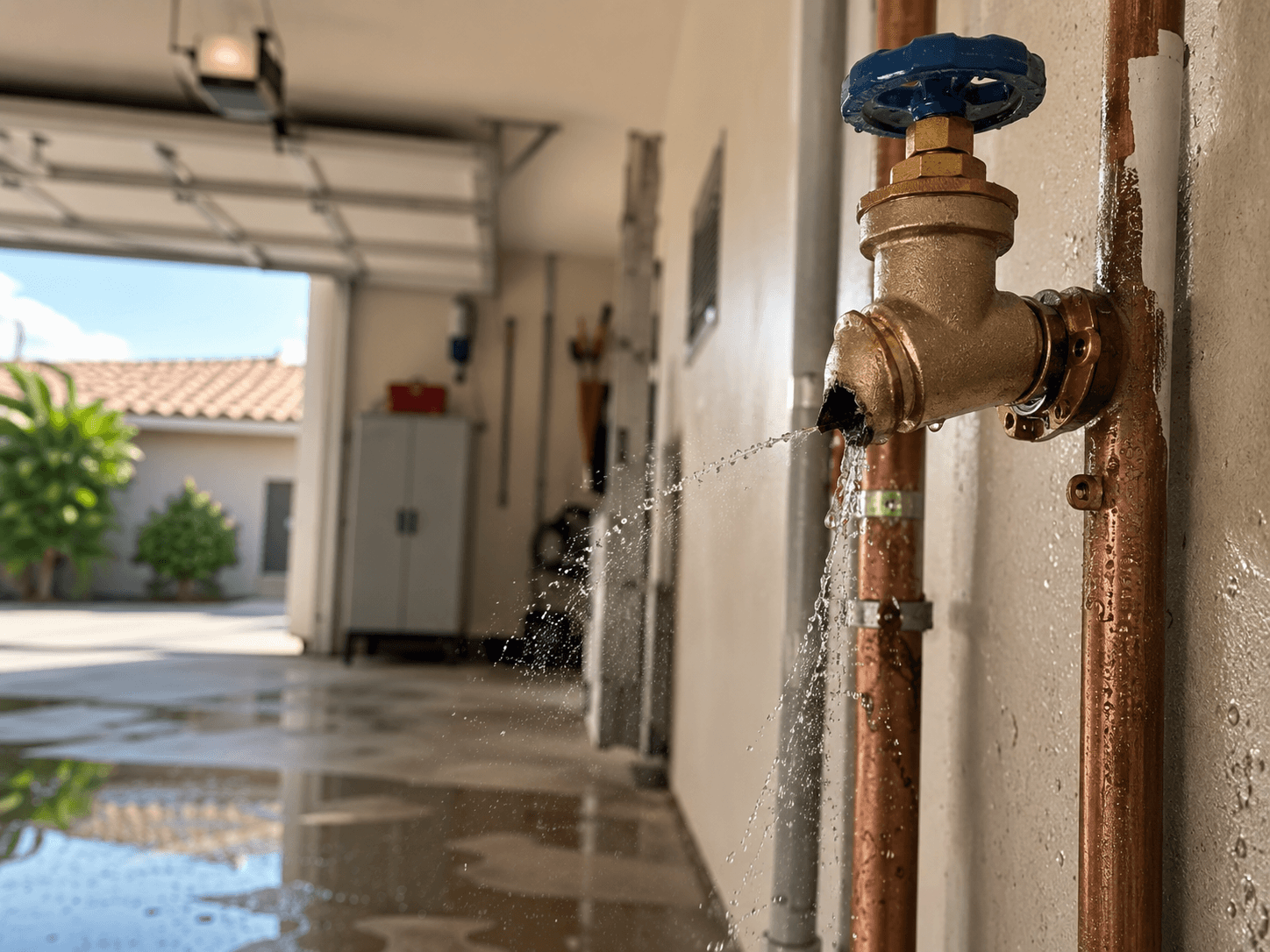
If the leak is from one fixture - a toilet, sink, or washing machine - turn off the small shutoff valve behind or under it. If you cannot find the source or the valve will not close, shut off the water to the whole house at the main shutoff. In many Southern California homes it is on the front or side of the house where the line comes in, often near a hose bib, or in the garage.
If a pipe burst or you cannot stop the leak, call a plumber right away. Our burst pipe guide covers the shutoff, the water heater, and what to do before the plumber arrives. Our emergency plumbers are available 24/7.
Step 3: Document the damage before you clean
Before you pick anything up, take photos and video. Insurance companies will want to see what happened and how bad it was. It only takes a few minutes and it can save a lot of back-and-forth later.
- Take wide shots of each room, then close-ups of damaged floors, walls, ceilings, and belongings.
- Photograph the source of the leak - the broken pipe, failed hose, or cracked tank.
- Show how high the water reached on walls, cabinets, and furniture.
- Keep damaged parts (like a burst supply line) in a bag. Do not throw away damaged items until your insurer says it is okay.
- Write down the time you found the water and what you did.
Step 4: Remove what you safely can
If the water is clean (from a supply line, not a toilet or sewer), you can start some simple cleanup while you wait for help:
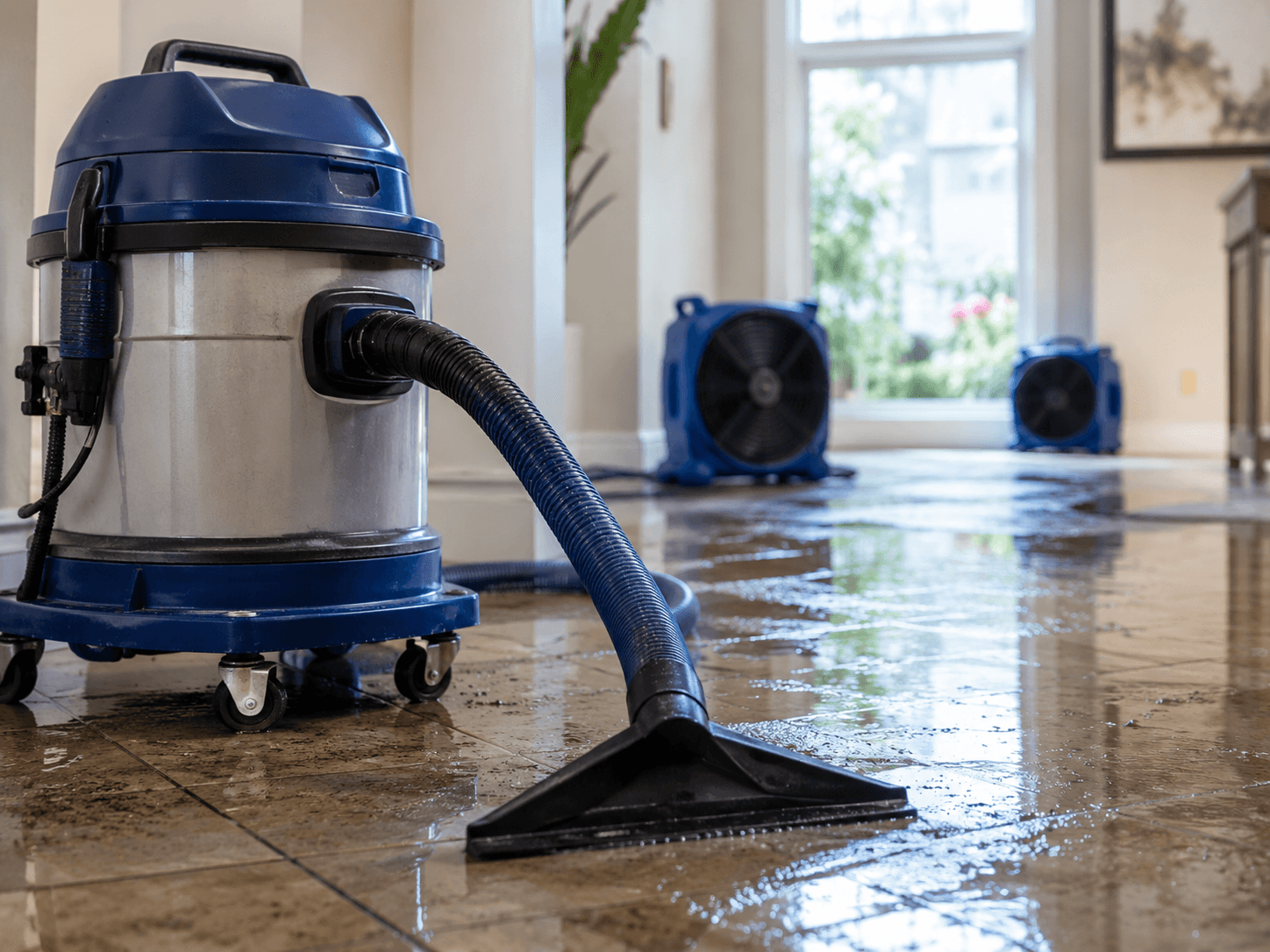
- Mop or wet-vac standing water if it is safe to do so.
- Move furniture, rugs, electronics, and boxes to a dry area.
- Put foil or wood blocks under furniture legs that cannot be moved, so stains do not bleed into the carpet.
- Lift drapes and furniture skirts off the floor.
- Open cabinet doors and closets so air can move.
Do not use a regular household vacuum on wet floors, and do not run ceiling fans or turn on lights in a room with a wet ceiling. If the water came from a toilet, sewer, or outside flooding, leave the cleanup to professionals.
Step 5: Call for help - restoration and insurance
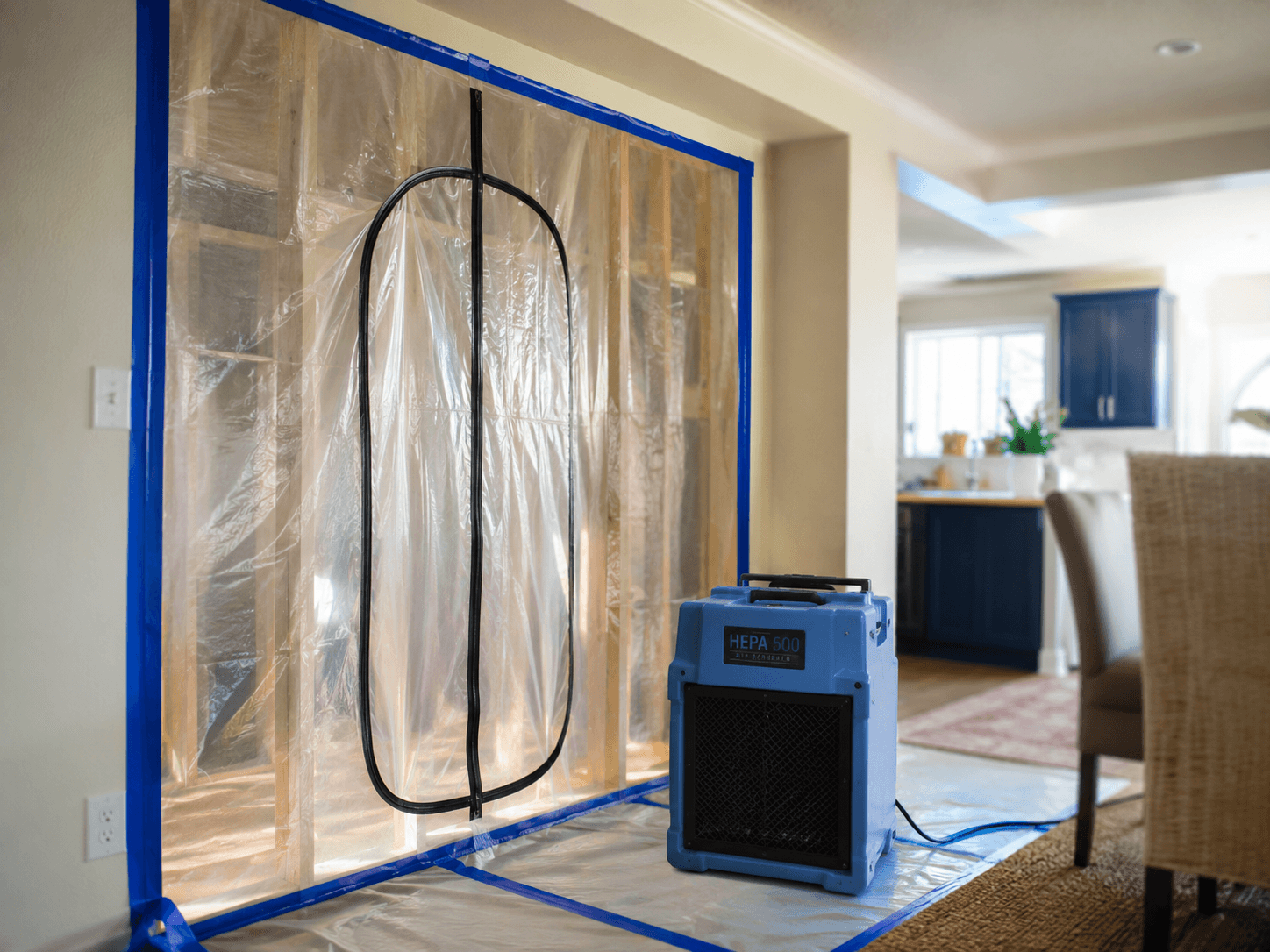
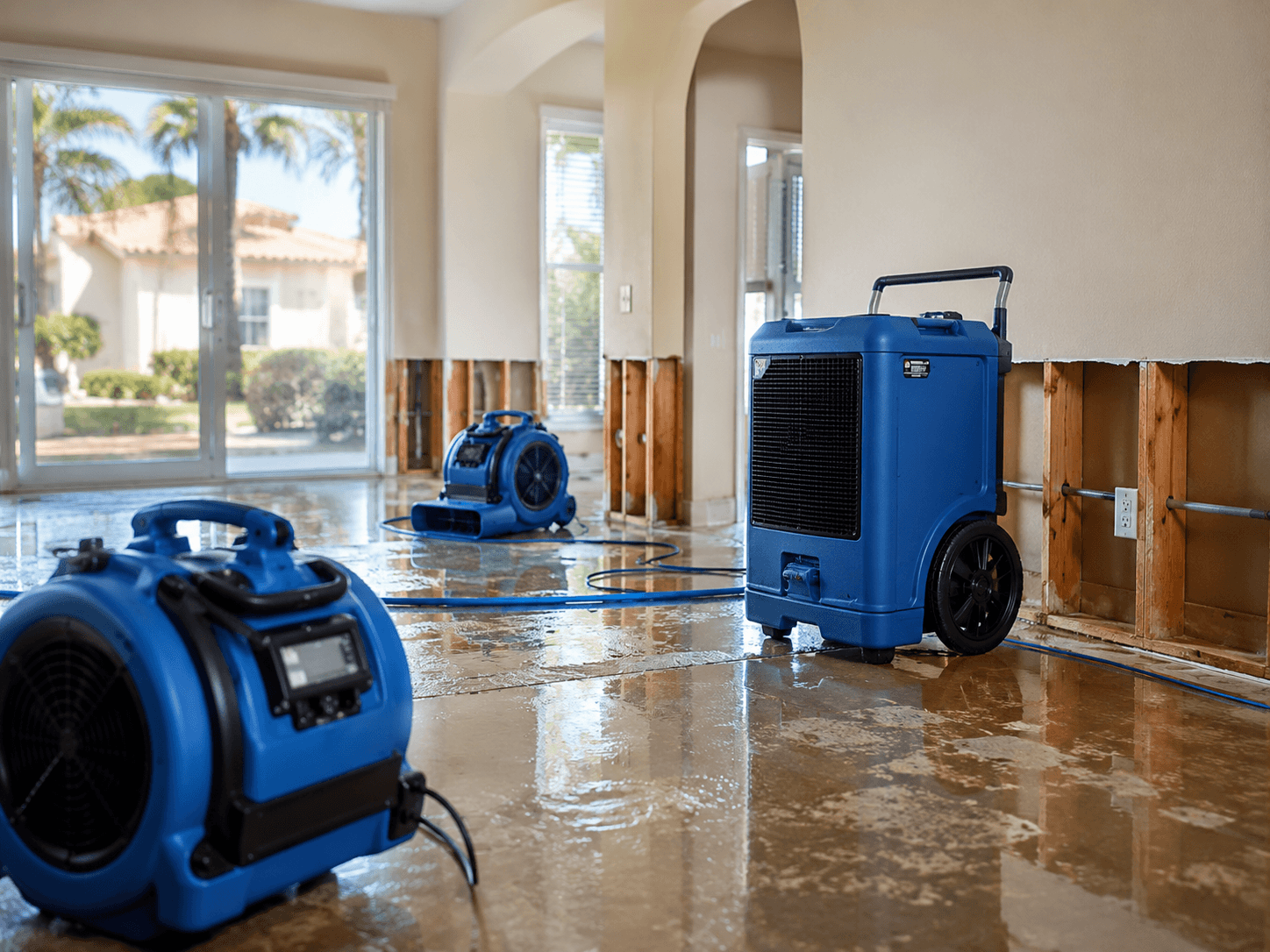
Call a water damage restoration company as soon as the water is stopped. Professional crews bring truck-mounted or portable extraction, commercial dehumidifiers, and air movers, plus moisture meters to find water you cannot see. At First Call Plumbing & Restoration, emergency arrival is typically 1-2 hours depending on your location and call volume.
Then call your insurance company or agent to report the loss. Most homeowners policies require you to take reasonable steps to protect your home from more damage, so starting the drying quickly is part of doing your part. Keep receipts for anything you buy or pay for. For more on what is and is not usually covered, see does homeowners insurance cover water damage in California.
What professional drying looks like
Restoration techs follow the IICRC S500 standard for water damage. Two things they check right away are the category of water (how clean or dirty it is) and the class of water (how much water there is and how hard the materials will be to dry). Both shape the plan and what has to be removed.
| Category | What it means | Common sources |
|---|---|---|
| Category 1 | Clean water from a sanitary source | Burst supply line, overflowing sink, water heater |
| Category 2 | Significant contamination, can cause illness | Dishwasher or washing machine discharge, toilet overflow with urine |
| Category 3 | Grossly contaminated, may carry pathogens | Sewer backup, toilet overflow with waste, outdoor floodwater |
Clean water does not stay clean. As it sits and touches building materials, it can get worse, which is another reason to move fast. A typical job looks like this:
- Inspection: find the source and map the wet areas with moisture meters.
- Extraction: remove standing water from floors and carpet.
- Removal: take out materials that cannot be saved, such as wet carpet pad, swollen baseboards, or soaked drywall.
- Drying: set up dehumidifiers and air movers and check moisture readings each day until materials reach dry goals.
- Repair: replace drywall, flooring, and trim once everything is dry.
Why the first 24 to 48 hours matter
The EPA advises drying water-damaged materials within 24 to 48 hours to help prevent mold growth. Mold can start growing on wet drywall, carpet, and wood in that window, especially when the space is warm and the air is still. This is not a hard deadline - mold may grow sooner or later depending on conditions - but the sooner things are dry, the better your odds. Learn more in how fast does mold grow after water damage.
If mold is already visible or you notice a musty smell days later, that is a job for professional mold remediation, not just drying.
Local things to watch for in the Inland Empire
- Slab foundations: most homes here sit on concrete slabs. Concrete soaks up water and dries slowly, and water can travel under flooring where you cannot see it. Moisture meters help find it.
- Hidden leaks: if water shows up on the floor with no clear source, the leak may be under the slab. See signs of a slab leak.
- Older homes: houses with original galvanized pipe are more likely to have corroded pipes give way.
- Hot summers: warm indoor air speeds up mold growth if a closed-up house stays damp. Running the AC alone is not enough to dry wet walls and floors.
- Winter storms: heavy rain can come in through roofs, windows, and doors. Floodwater that flows in from outside is treated as Category 3.
Common mistakes to avoid
- Waiting to see if it dries on its own. Surfaces may feel dry while the wall cavity and slab are still wet.
- Throwing out damaged items before you document them.
- Using household fans only. They help, but they do not pull moisture out of the air like a dehumidifier.
- Painting over a water stain without fixing the leak and confirming the area is dry.
- Turning power back on in a wet room before it has been checked.
Water damage does not wait for business hours, and neither do we. First Call Plumbing & Restoration is open 24/7 with IICRC-certified restoration techs working out of San Bernardino and serving homes across the Inland Empire. Call (909) 751-2323 or contact us and we will stop the water, document the damage, and get drying started.
Frequently asked questions
How long does it take to dry out a house after water damage?+
It depends on how much water there was and what got wet. Many jobs take several days of professional drying, while dense materials like concrete, hardwood, and plaster can take longer. Techs check moisture readings daily and stop only when materials reach dry goals.
Can I clean up water damage myself?+
You can handle a small spill of clean water that you catch right away. For larger leaks, water inside walls or under flooring, or any dirty water from a toilet, sewer, or outdoor flooding, call a professional. Hidden moisture is the main cause of mold after a leak.
Should I call my insurance company or a restoration company first?+
Make sure everyone is safe and the water is stopped, then call both as soon as you can. Starting mitigation quickly helps protect your home, and most policies expect you to prevent further damage. Keep photos and receipts for your claim.
Is wet drywall always replaced?+
Not always. Drywall wet with clean water and caught early can often be dried in place if it is not swollen or crumbling. Drywall soaked with dirty water, or that has been wet too long, usually needs to be cut out and replaced.
This guide is general information, not a quote or professional advice for your specific home or insurance policy. Prices are approximate - we give an up-front quote before any work begins.