Quick answer
National cost guides put the average water damage restoration job at roughly $3,500 to $3,900, with most homeowners paying about $1,400 to $6,400, and Southern California prices can differ. The biggest cost drivers are the water category, how much area got wet, drying time, which materials must be replaced, and rebuild work.
If you are standing in a wet hallway, one of the first things on your mind is probably cost. It is a fair question, and the honest answer is that water damage jobs vary a lot. A small leak caught in an hour is a very different job from a sewer backup that soaked three rooms over a weekend.
This guide explains what goes into the price of water damage restoration, shares typical ranges from national cost guides, and covers how insurance usually fits in. Every home is different, so we always give you an up-front quote after we inspect.
Typical cost ranges (national averages)
National cost guides from HomeAdvisor and Angi put the average water damage restoration job at roughly $3,500 to $3,900, with most homeowners paying somewhere between about $1,400 and $6,400. Small jobs can come in under that, and large losses that need major rebuilding can cost much more. Prices in Southern California can differ from national averages, so use these as a rough guide only.
| Item | Typical national range (approximate) |
|---|---|
| Average restoration job | About $3,500 - $3,900 |
| Most common range | About $1,400 - $6,400 |
| Category 1 (clean water) cleanup | About $3.50 per sq ft |
| Category 2 (gray water) cleanup | About $5.25 per sq ft |
| Category 3 (black water) cleanup | About $7.50 per sq ft |
| Drywall replacement | About $1.50 - $3 per sq ft |
| Mold remediation (if needed) | About $1,100 - $3,400 |
What drives the cost
1. The category of water
The IICRC S500 standard sorts water by how contaminated it is. Category 1 is clean water from a supply line or water heater. Category 2 has significant contamination, like washing machine discharge. Category 3 is grossly contaminated, like sewer backup or outdoor floodwater. Dirtier water means more protective gear, more materials that must be thrown out instead of dried, and more cleaning and disinfecting - so the price per square foot goes up.
Time matters here too. Clean water that sits for a day or two can degrade to a higher category, which is one reason fast response saves money.
2. The class of water (how much and how wet)
The IICRC also uses four classes to describe how much water there is and how hard the area will be to dry:
- Class 1: only part of a room is wet, with little absorbed into materials.
- Class 2: at least a whole room of carpet and pad is wet, and water has wicked up walls (under about 24 inches).
- Class 3: the most water, often from overhead - ceilings, walls, insulation, and floors are soaked.
- Class 4: specialty drying for dense materials like hardwood, plaster, brick, and concrete, which hold water and dry slowly.
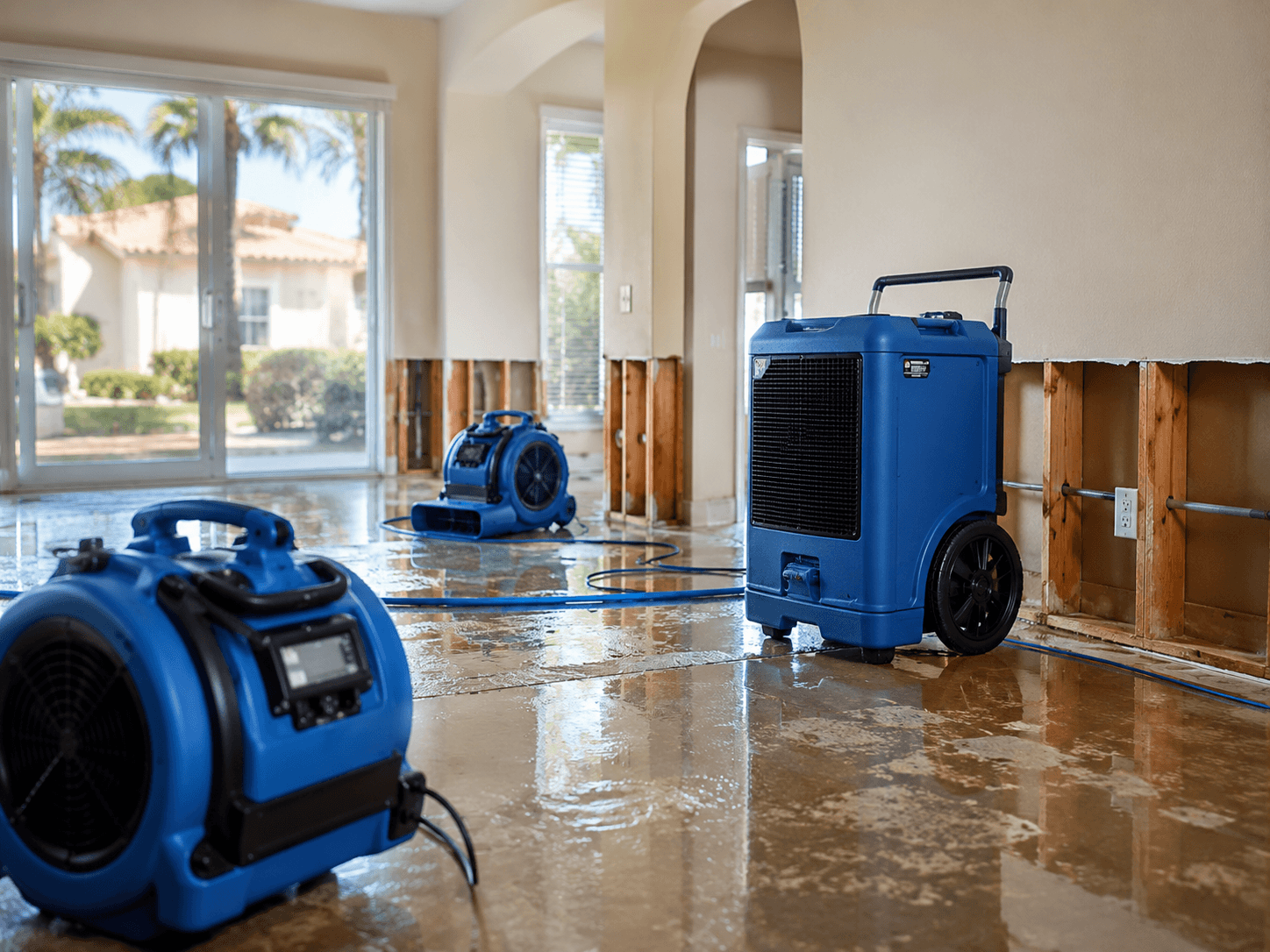
Higher classes need more dehumidifiers and air movers, and often more days of drying.
3. Square footage affected
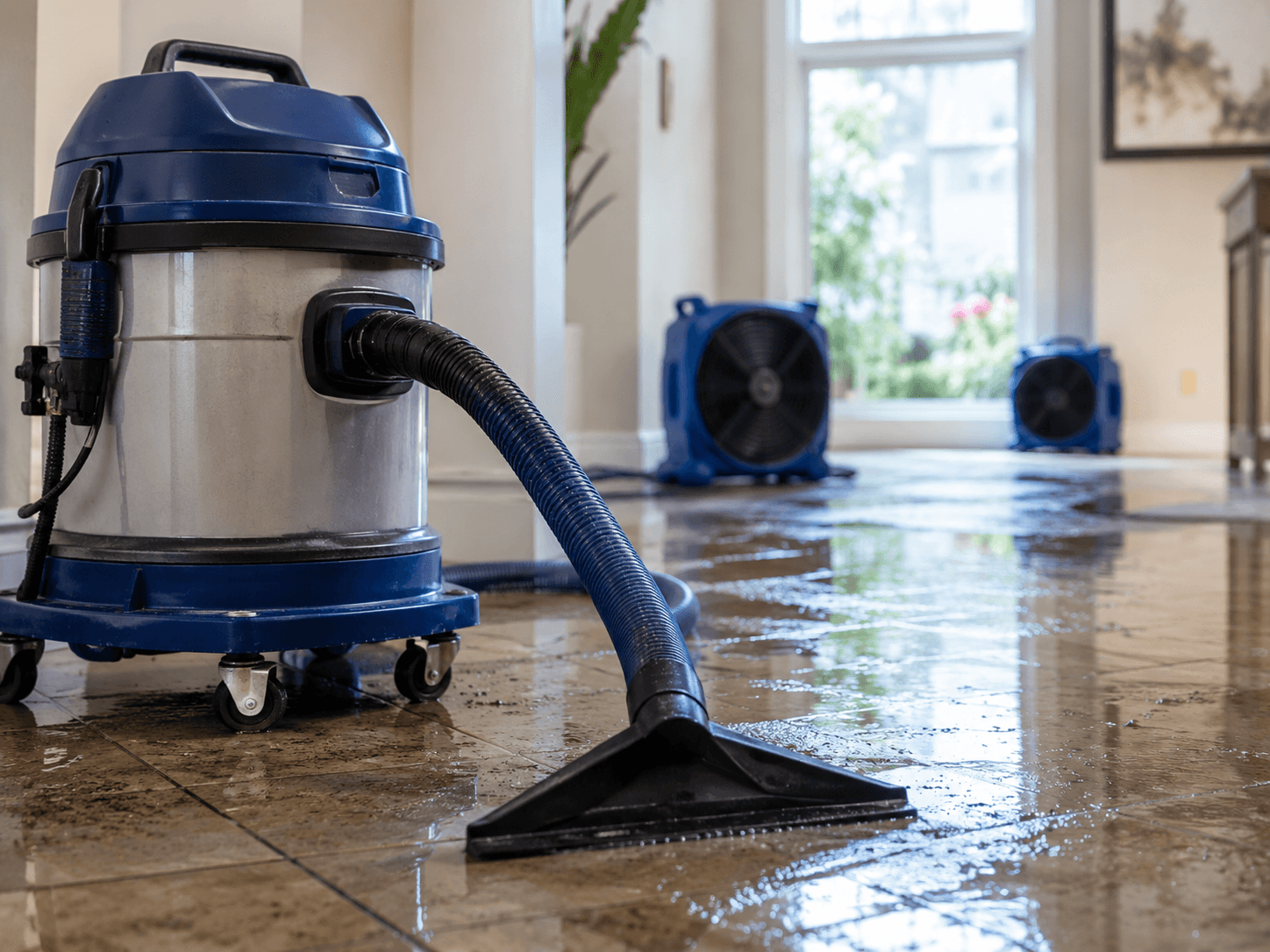
More wet area means more extraction, more equipment, and more materials to remove and replace. Water spreads fast across hard floors and under walls, so the affected area is often bigger than it first looks.
4. Drying time and equipment
Drying is usually billed by the equipment used and the number of days it runs, plus daily moisture monitoring. Many jobs take several days. Dense materials take longer. Most Inland Empire homes sit on concrete slabs, and a soaked slab can take extra time to dry before new flooring goes down.
5. What materials got wet
Some materials dry well, and some need to be replaced. Carpet pad soaked with clean water is often removed because it is inexpensive and hard to dry. Laminate and some vinyl plank floors trap water underneath. Hardwood may be saved with specialty drying or may cup and need replacing. Particleboard cabinet bases tend to swell. The more that has to come out, the higher the cost.
6. Rebuild and repairs
Restoration usually happens in two phases. Mitigation is the emergency work: extraction, tear-out, and drying. Reconstruction is putting things back: drywall, paint, baseboards, flooring, and cabinets. The rebuild is often the larger part of the total. Our reconstruction and rebuild team can handle both, so you are not managing separate contractors.
7. Fixing the source
The leak itself has to be repaired, and that is a separate cost. It might be a simple supply line, or it might be a slab leak, a failed water heater, or an old galvanized pipe that needs a bigger fix.
8. Mold and contents
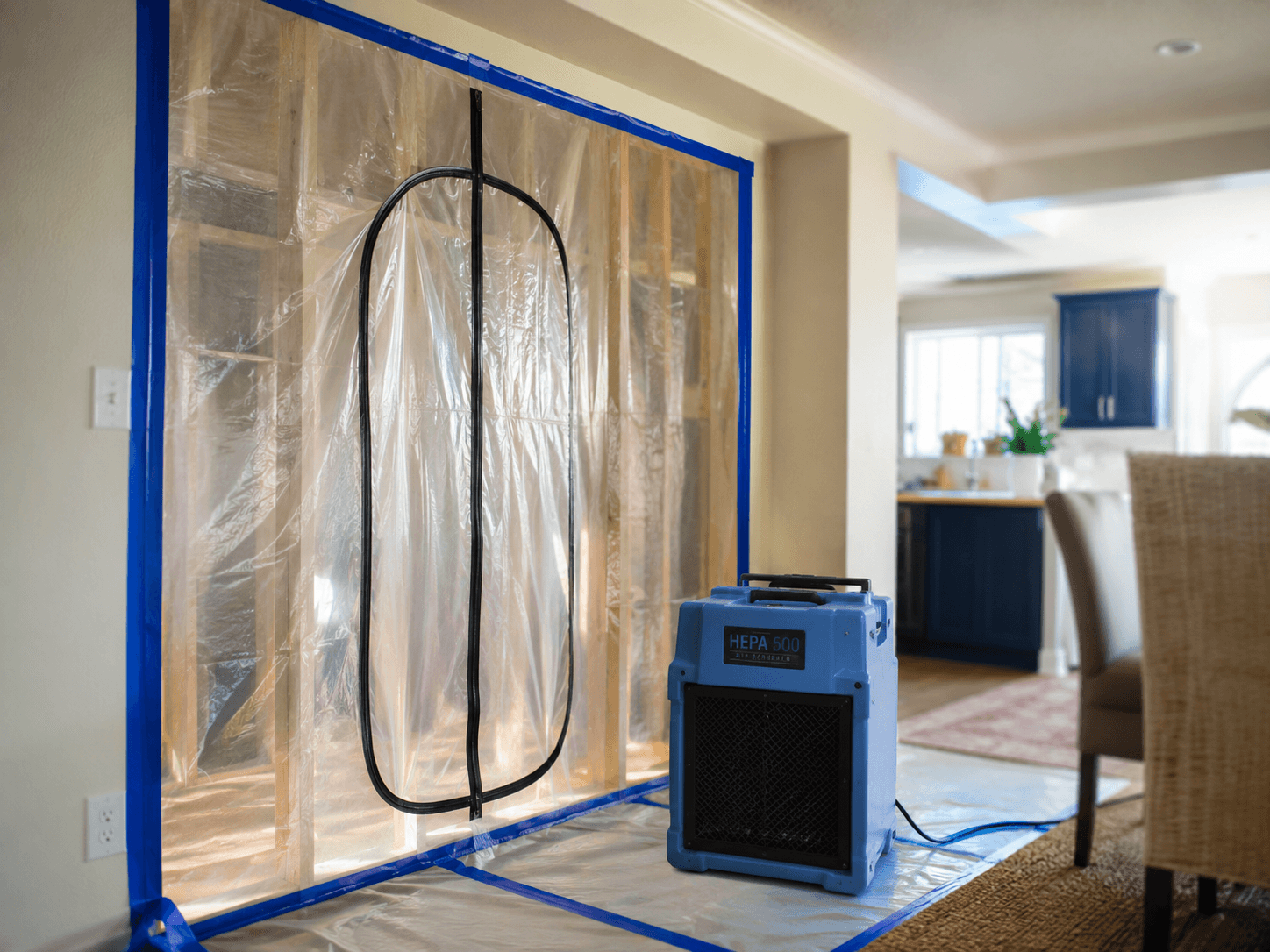
If water sat long enough for mold to grow, mold remediation adds cost and containment steps. Cleaning, packing out, or storing furniture and belongings can also add to the bill.
Local factors that can affect your bill
A few things about homes in Riverside and San Bernardino counties tend to shape water damage jobs:
- Concrete slabs. Water that runs under flooring soaks into the slab, which dries slowly. That can add drying days before new floors go in.
- Two-story homes. An upstairs bathroom or laundry leak can travel down through the ceiling and walls below, turning one leak into two floors of drying.
- Older plumbing. Homes with original galvanized pipe may need more than a spot repair, which adds to the plumbing side of the job.
- Storm season. Winter storms can bring outdoor water inside, which is treated as Category 3 and costs more to clean up safely.
How insurance fits in
If the damage came from a sudden and accidental event, like a burst pipe, your homeowners policy may cover much of the restoration after your deductible. Damage from slow leaks over time, floods, and mold is often excluded or limited. Read more in does homeowners insurance cover water damage in California, and always check your own policy.
We document the job with photos, moisture readings, and a written scope, and we can work with your adjuster. The settlement is between you and your insurer, and we do not promise any claim will be approved. Either way, you will get a clear quote from us.
How to keep the cost down
- Stop the water fast. Know where your main shutoff is. See what to do when a pipe bursts.
- Call right away. The longer water sits, the more spreads, wicks up walls, and degrades in category.
- Move belongings out of the wet area if it is safe.
- Do not wait for it to dry on its own. Hidden moisture often leads to mold and bigger repairs later.
- Fix the root cause. Replacing a failing water heater or worn supply lines costs far less than repeat water damage.
What a fair estimate should include
- The source of the water and its category.
- A list of rooms and approximate square footage affected.
- What will be removed and why.
- The drying equipment planned and how progress will be checked.
- Rebuild work, listed separately from mitigation.
- A license number you can look up. Ours is CSLB Lic. #798425.
Be careful with anyone who pressures you to sign right away, will not explain line items, or promises that insurance will pay for everything.
The fastest way to know your real cost is a quick inspection. First Call Plumbing & Restoration is open 24/7 with IICRC-certified techs across Riverside and San Bernardino counties. Call (909) 751-2323 or contact us for an up-front quote.
Frequently asked questions
How much does water damage restoration cost on average?+
National cost guides put the average job at roughly $3,500 to $3,900, with most homeowners paying about $1,400 to $6,400. Small leaks can cost less and large losses with major rebuilding can cost much more. We give you an up-front quote after inspecting.
Why is sewage cleanup more expensive than a clean water leak?+
Sewage is Category 3 water, which can carry harmful bacteria. More materials have to be removed instead of dried, crews need more protective gear, and everything must be cleaned and disinfected. That adds labor and disposal costs.
Does insurance pay for water damage restoration?+
Often it does when the damage is sudden and accidental, like a burst pipe, after you pay your deductible. Gradual leaks, flooding, and mold are often excluded or limited. Check your own policy and talk to your insurer.
Is the leak repair included in the restoration price?+
Usually it is a separate line item. Restoration covers drying and repairing the damage, while the plumbing repair fixes the source. Because we do both plumbing and restoration, we can quote both together.
This guide is general information, not a quote or professional advice for your specific home or insurance policy. Prices are approximate - we give an up-front quote before any work begins.