Quick answer
It's likely time to repipe if your home still has galvanized steel or polybutylene water lines, or if you're seeing rusty water, low pressure throughout the house, repeated pinhole leaks in copper, or more than one slab leak. A whole-home repipe on most single-family houses takes about two to five days.
Water supply pipes don't last forever. Some materials corrode from the inside, some break down from the chemicals used to disinfect tap water, and some simply wear thin after decades of use. Fixing one leak at a time can work for a while, but at some point the whole system is the problem.
Repiping means replacing a home's water supply lines with new pipe, usually copper or PEX. This guide covers the signs that point to a repipe, how to tell what kind of pipe you have, how PEX and copper compare, how long the job takes, and what to know about permits.
7 signs your house may need repiping
1. You still have galvanized steel pipe
Galvanized pipe is steel coated with zinc. It was common in older homes, especially those built before the 1960s. Over time the zinc wears away and the steel rusts from the inside, and leaks often start at the threaded joints. When one section fails, others are often close behind.
To check, look at the pipe where the main line enters the house or near the water heater. Galvanized pipe is dull gray, has threaded fittings, and a magnet will stick to it. A magnet won't stick to copper.
There's also a lead concern. The EPA notes that galvanized pipe that is or was downstream of lead pipe can collect lead and release it into drinking water later. If you have galvanized lines, ask your water provider about your service line and consider having your water tested.
2. Rusty or discolored water
Brown, yellow, or reddish water, especially first thing in the morning or after you've been away, often comes from rust inside galvanized pipe. If only the hot water is discolored, the water heater may be the source instead, so it's worth having both checked.
3. Low pressure throughout the house
As rust and scale build up inside old pipe, the opening gets smaller and less water gets through. Low pressure at just one faucet is usually a clogged aerator or cartridge. Low pressure everywhere, or pressure that drops when two fixtures run at once, points to the pipes themselves.
4. Gray plastic polybutylene pipe
Polybutylene was installed in millions of U.S. homes from about 1978 to the mid-1990s. It's usually gray, sometimes blue or black, often stamped PB2110, and typically joined with plastic or metal fittings held by crimp rings. Chlorine and other disinfectants in tap water can break it down from the inside, and failures tend to happen at fittings and bends, often with little warning.
Leaks led to a large class-action settlement in the mid-1990s, and polybutylene is no longer accepted by U.S. building codes. If your home was built or replumbed during that window, it's worth checking. Because damage happens inside the pipe, it's hard to judge how much life is left.
5. Repeated pinhole leaks in copper
Copper is durable, but it can develop tiny pinhole leaks from pitting corrosion. Research has linked this to water chemistry, such as chlorine levels and pH, and to water moving through the pipe at high speed. One pinhole can be repaired. Several in different spots usually means the pipe walls are thinning throughout the system.
6. More than one slab leak
Many Inland Empire homes are built on concrete slabs with water lines underneath. A first slab leak is often fixed with a spot repair or a reroute. A second or third leak in the same aging pipe is a strong sign the rest of the line is near the end of its life. See our guide to the signs of a slab leak, or schedule slab leak detection if you suspect one now.
7. Corrosion or leaks at fittings
Green or white crust on copper fittings, rust on threaded joints, or damp spots under sinks and around the water heater all mean water is getting out or wearing the pipe down. One bad fitting can be replaced. Corrosion at many fittings is a system-wide problem.
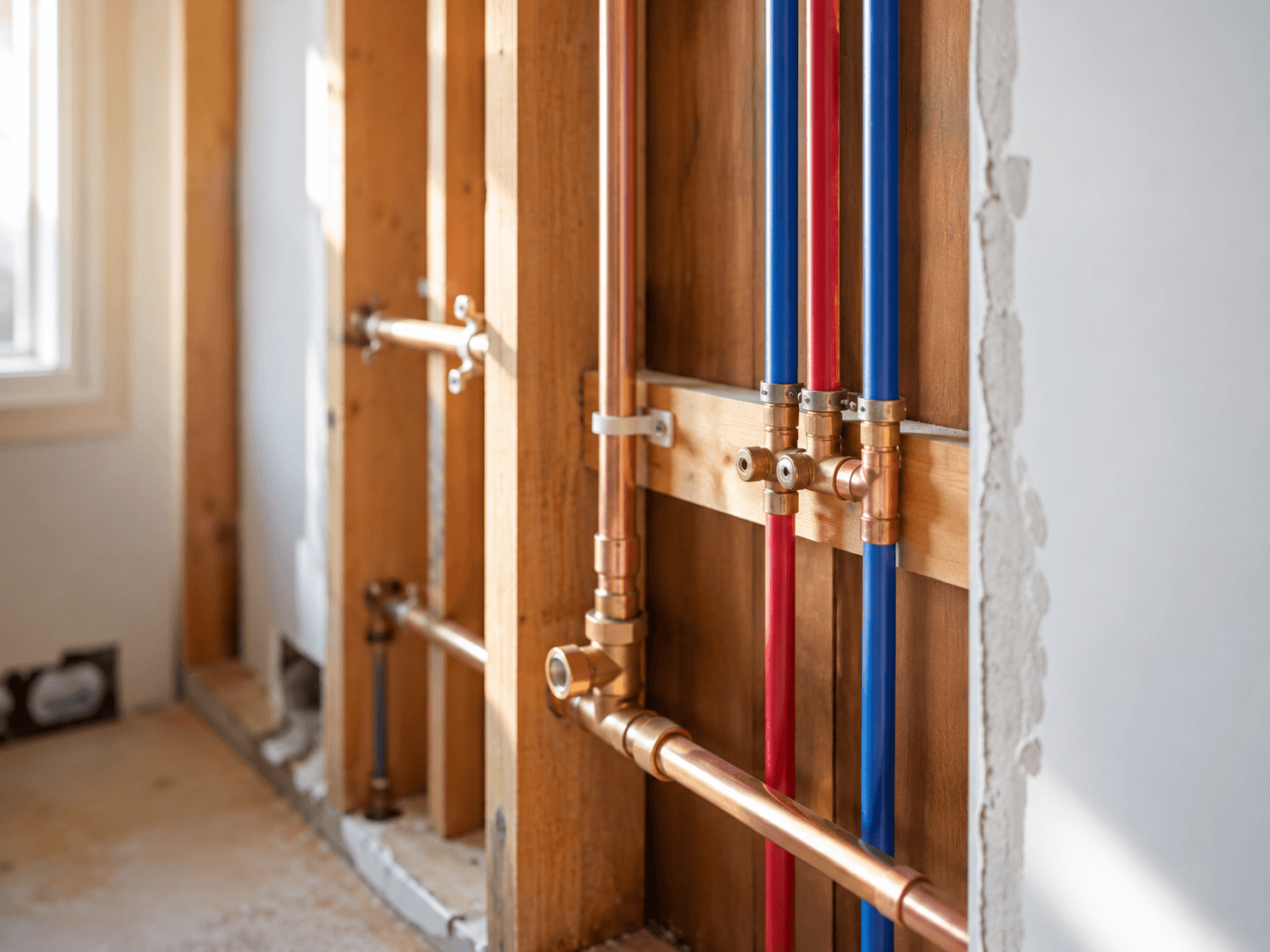
PEX vs. copper repipes
Both are reliable choices, and both are allowed under the California Plumbing Code. PEX has been approved for statewide use since 2010. Here's how they compare:
| Compare | PEX | Copper |
|---|---|---|
| What it is | Flexible plastic tubing | Rigid metal pipe |
| Installation | Bends around corners with fewer fittings. Usually quicker to install inside finished walls. | Cut and joined with a fitting at each turn, usually soldered. |
| Corrosion | Doesn't rust or corrode | Can develop pinhole leaks in some water conditions |
| Sunlight | Must be protected from UV light, so it's not for exposed outdoor runs | Handles sunlight and exposed locations |
| Track record | Widely used in newer homes and repipes | Used in homes for many decades |
| Cost | Generally lower for material and labor | Generally higher |
The better choice depends on your home, your water, and your budget. Some homeowners prefer copper's long history. Others choose PEX because it needs fewer fittings and can go in faster with less wall work. We install both and will walk you through the trade-offs for your house. Learn more on our repiping and water lines page.
How long does a repipe take?
Most whole-home repipes on single-family houses take about two to five days. Larger or two-story homes can take a week or more, and partial repipes are often faster. The time depends on the home's size, the number of bathrooms, the pipe material, and how much wall patching is needed. A typical job goes like this:
- Inspection and quote. The plumber checks the pipe material, pressure, and condition, plans the new route, and gives you a written price and timeline.
- Permit. The plumbing permit is pulled before work starts.
- Prep. Floors and furniture near the work areas are covered and protected.
- Access. Small openings are cut in drywall to reach the old lines and run the new ones.
- New lines. New pipe is run and connected to each fixture, appliance, and the water heater.
- Testing and inspection. The new system is pressure tested, then checked by the city or county inspector.
- Patching. Access openings are closed up. Ask whether patching and painting are included in your quote.
Expect the water to be off during parts of the job. Ask your plumber ahead of time how long it will be off each day so you can plan around it.
Do you need a permit to repipe?
Yes. Repiping a house in California generally requires a plumbing permit and inspection from your city or county. The inspection confirms the new lines are installed and tested to code. Keep the permit and final inspection records with your home documents, since they can be useful when you sell.
First Call Plumbing & Restoration (CSLB Lic. #798425) pulls the permit and coordinates the inspection as part of every repipe, and you approve up-front pricing before any work begins. See our full list of plumbing services.
Talk to a plumber about your pipes
If you're seeing more than one of these signs, a plumber can check your pipe material and condition and tell you honestly whether repairs still make sense. We're open 24/7 for leaks and emergencies. Call (909) 751-2323 or contact us to schedule a repipe consultation.
Frequently asked questions
How do I know if my house needs to be repiped?+
Common signs include galvanized steel or polybutylene pipe, rusty or discolored water, low pressure throughout the house, repeated pinhole leaks in copper, and more than one slab leak. A plumber can check your pipe material and condition and tell you whether spot repairs still make sense.
Is PEX or copper better for repiping?+
Both are reliable and allowed under the California Plumbing Code. PEX is flexible, needs fewer fittings, and usually installs faster inside finished walls. Copper is a rigid metal pipe with a long track record and handles sunlight in exposed spots. The better choice depends on your home and budget.
How long does it take to repipe a house?+
Most whole-home repipes on single-family houses take about two to five days. Larger or two-story homes can take a week or more, and partial repipes are often faster. Your plumber should give you a timeline with your quote.
What years was polybutylene pipe used?+
Polybutylene was installed in U.S. homes from about 1978 to the mid-1990s. It's usually gray and often stamped PB2110. It's no longer accepted by U.S. building codes, and many owners replace it because it can fail with little warning.
Do I need a permit to repipe a house in California?+
Yes, repiping generally requires a plumbing permit and inspection from your city or county. The inspection confirms the new lines are installed and tested to code. A licensed plumber should pull the permit and coordinate the inspection.
This guide is general information, not a quote or professional advice for your specific home or insurance policy. Prices are approximate - we give an up-front quote before any work begins.