Quick answer
Wet carpet can often be saved if the water was clean and the carpet is extracted and dried within 24 to 48 hours. The pad underneath is usually replaced. Carpet soaked by sewage or outdoor floodwater, or wet long enough to smell musty or come apart, should be removed and thrown away.
A supply line bursts, the water heater leaks, or the washing machine overflows, and now the carpet squishes when you walk on it. The first question most people ask is whether it has to be torn out.
Often it doesn't. But the answer depends on three things: what kind of water it was, how long it has been wet, and what shape the carpet and pad are in. This guide walks through each one so you know what to expect.
1. What kind of water was it?
Restoration techs follow the IICRC S500 standard for water damage, which sorts water into three categories based on how contaminated it is. The category is the biggest factor in whether carpet can be cleaned and kept.
| Category | Common sources | Carpet | Pad |
|---|---|---|---|
| Category 1 (clean) | Burst supply line, overflowing sink, water heater | Often dried and saved if handled quickly | Sometimes dried, often replaced |
| Category 2 (contaminated) | Washing machine or dishwasher discharge, toilet overflow with urine | May be cleaned and dried if handled fast | Usually removed and replaced |
| Category 3 (grossly contaminated) | Sewer backup, toilet overflow with waste, outdoor floodwater | Removed and thrown away | Removed and thrown away |
Clean water doesn't stay clean. As it sits and soaks into dirty materials, Category 1 water can turn into Category 2 or 3. That's one more reason to act fast.
Sewage is the clearest case. Under the IICRC S500, carpet and pad affected by Category 3 water are generally removed and discarded rather than cleaned. The CDC also advises throwing away items soaked by floodwater that can't be disinfected. If that's your situation, see sewage backup in your house: what to do.
2. How long has it been wet?
The EPA advises drying water-damaged materials within 24 to 48 hours to help prevent mold. Its water damage cleanup guidance says carpet and backing should be dried in that window using a water extraction vacuum, dehumidifiers, and fans.
Past 48 hours, the EPA's guidance treats wet materials as possibly moldy, and it notes that absorbent materials like carpet may have to be thrown away if they become moldy. Mold can grow before you can see it, especially in the pad and on the back of the carpet. Learn more in how fast does mold grow after water damage.
- Caught within a day, clean water: your best odds of saving the carpet.
- One to two days: still often saveable with professional drying, but the pad is more likely to go.
- More than two days, or a musty smell: replacement becomes likely.
These are rough guides, not hard deadlines. Warm rooms, still air, and thick pad all make things worse.
3. What shape are the carpet and pad in?
Even with clean water and fast drying, some damage can't be undone. Plan on replacing the carpet if you see any of these:
- Delamination. Carpet that stays wet too long can have its backing layers come apart. Look for ripples or bubbles that won't lie flat after drying.
- A musty smell that comes back after the carpet is dry.
- Visible mold on the back of the carpet, the pad, or the wood tack strip along the walls.
- Stains that won't come out, including rust or dye from furniture legs.
- Older or low-cost carpet, where professional drying can cost about as much as new carpet.
Why the pad is usually replaced
Carpet pad works like a sponge. It holds a lot of water, dries slowly, and is hard to clean once it soaks up dirty water. It also costs much less than the carpet on top. That's why restoration crews often replace the pad even after a clean-water leak, and almost always after Category 2 or 3 water.
Pulling the pad also lets air reach what's underneath. Most Inland Empire homes sit on concrete slabs, and concrete soaks up water and dries slowly. Upstairs, water can soak into the wood subfloor. Moisture meters show when those are actually dry.
How professionals dry carpet
- Inspect and map the water. Moisture meters find where the water spread. The wet area is often bigger than it looks.
- Decide what stays. The tech identifies the water category and checks the carpet and pad to decide what can be saved.
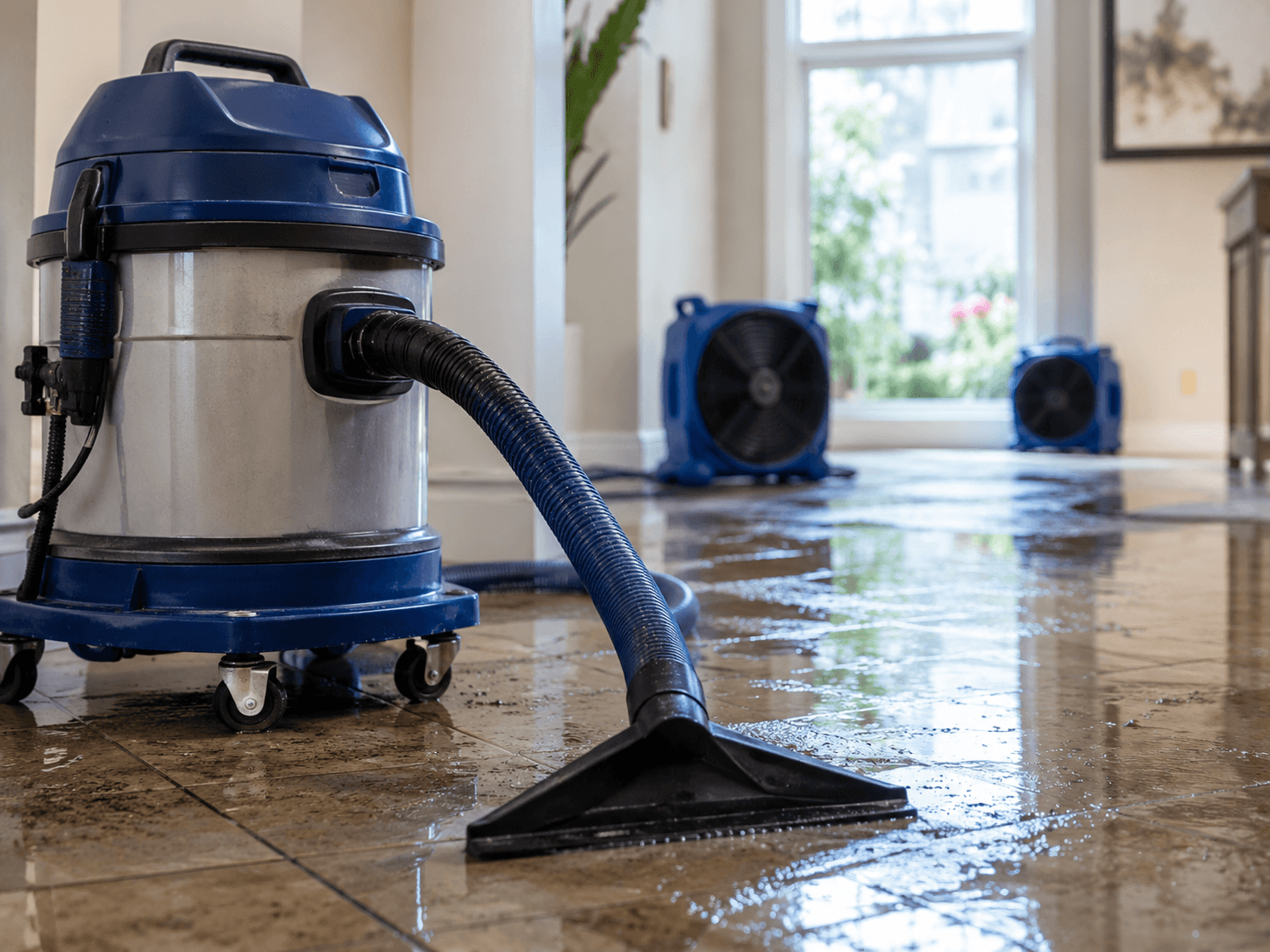
- Extract. Powerful extraction removes far more water than fans alone. Weighted or subsurface tools press into the carpet to squeeze water out of the pad.
- Remove the pad if needed. The carpet is pulled back from the tack strip so the pad can come out.
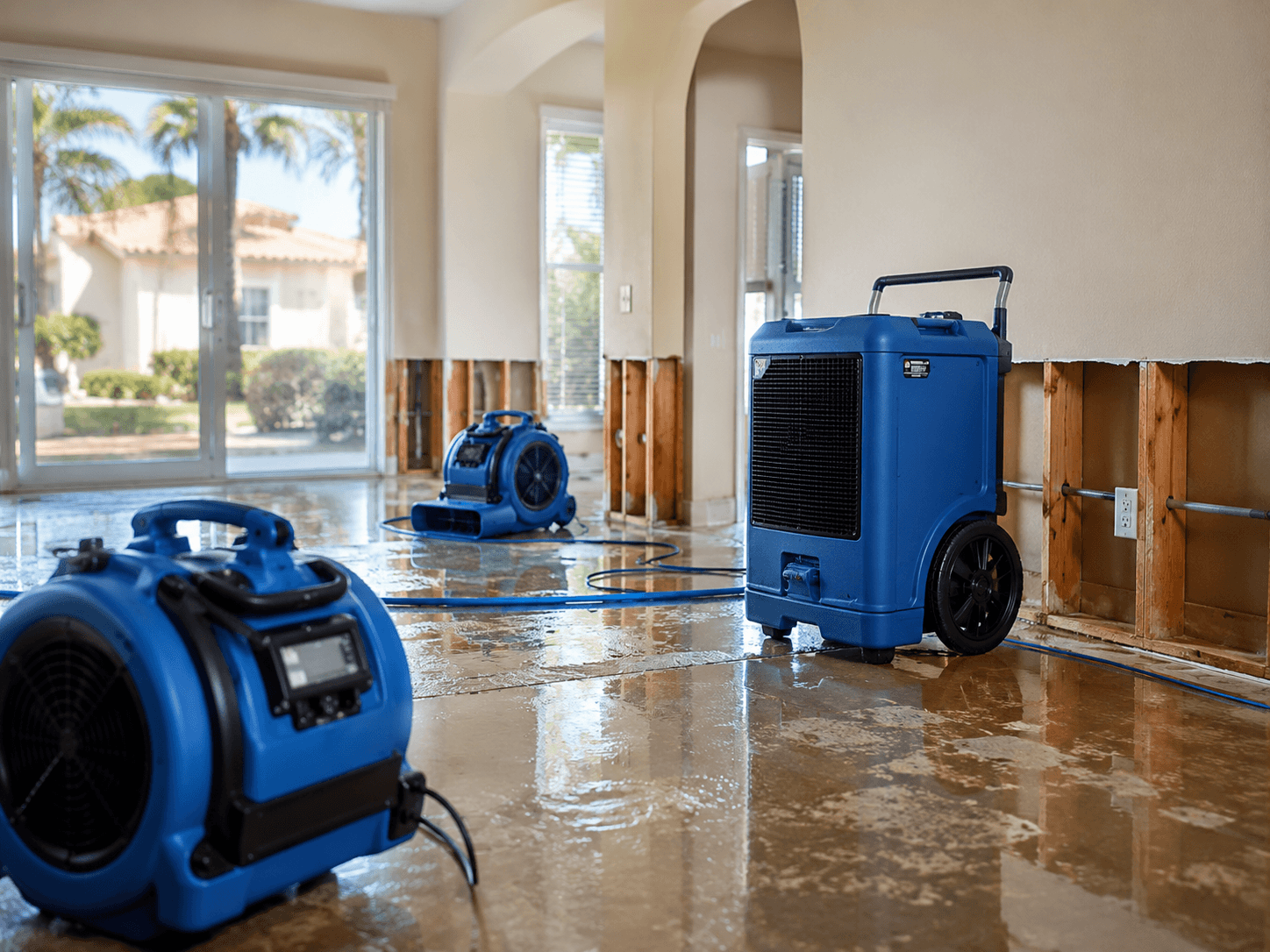
- Float or dry in place. For a clean-water loss, air movers can blow under the lifted carpet so it dries from both sides, a method called floating. Sometimes carpet can be dried flat from the top.
- Dehumidify. Commercial dehumidifiers pull the moisture out of the air so it doesn't just move around the room.
- Check daily, then reinstall. Techs take moisture readings until materials reach dry goals. Then the carpet is cleaned and re-stretched over new pad.
The risks of drying it yourself
A small spill of clean water that you catch right away is usually fine to handle on your own. Pull up as much water as you can, lift furniture off the carpet, and run fans and a dehumidifier. For anything bigger, keep these risks in mind:
- Wet vacs and rental cleaners mostly reach the top. Much of the water stays in the pad and on the slab.
- Dry on top isn't dry underneath. The surface can feel dry while the pad stays wet for days, which is where mold and odor start.
- Wet backing is weak. Pulling up or stretching wet carpet can tear it or make it delaminate.
- Electrical danger. Never use a household vacuum on wet carpet, and keep cords out of the water.
- Health risk. Carpet soaked by sewage, toilet waste, or floodwater needs protective gear and proper disposal.
- Insurance trouble. If you tear out and toss carpet before documenting it, your claim can get harder. Take photos and keep a small sample.
For the full first-day checklist, see what to do after water damage: the first 24 hours.
How we help
First Call Plumbing & Restoration provides water damage restoration across the Inland Empire with IICRC-certified techs. We find and fix the leak, sort out what can be saved, extract and dry the carpet and structure, and replace the pad and flooring when needed. We document everything with photos and moisture readings, and we can work with your adjuster, though coverage decisions are up to your insurer.
Got wet carpet right now? The sooner drying starts, the better your odds. We're open 24/7, and emergency arrival is typically 1-2 hours depending on your location and call volume. Call (909) 751-2323 or contact us.
Frequently asked questions
Can carpet be saved after a toilet overflow?+
It depends on what was in the water. An overflow with urine but no waste is Category 2, so the carpet may be cleaned and dried if handled quickly, while the pad is usually replaced. An overflow with waste is Category 3, and the carpet and pad should be removed.
How long does it take to dry wet carpet?+
With professional extraction, dehumidifiers, and air movers, carpet often dries within a few days. The slab, subfloor, and walls can take longer. Techs check moisture readings each day and stop only when materials reach dry goals.
Will wet carpet always grow mold?+
Not always, but the risk climbs if it stays wet. The EPA advises drying water-damaged materials within 24 to 48 hours to help prevent mold. A carpet that smells musty after drying likely has a problem in the pad or backing.
Do I have to replace the pad if the carpet is saved?+
Usually, yes. Pad holds a lot of water, dries slowly, and is hard to clean, and it costs much less than carpet. After a small, clean-water leak caught fast, it can sometimes be dried. After contaminated water, it should be replaced.
Will insurance pay to replace wet carpet?+
It depends on your policy and the cause. Sudden, accidental leaks are often covered, while slow leaks and outdoor flooding often are not. We document the damage and can work with your adjuster, but the decision is up to your insurer.
This guide is general information, not a quote or professional advice for your specific home or insurance policy. Prices are approximate - we give an up-front quote before any work begins.